In the memories of my childhood, there are two distinct fragments concerning Japan.
In my maternal grandfather’s room, there was a large bookcase filled with Chinese and foreign literary classics. Hanging on the glass door of that bookcase was a broad piece of red cloth, upon which were written several large, bold characters in brush calligraphy: “Sino-Japanese Friendship”. At that young age, I was entirely oblivious to the profound weight of emotion carried by those four words.
My aunt traveled to Japan in her youth to study, where she met a Japanese man who later became my uncle. When she first brought him back to China for a family gathering, I merely observed this Japanese man—who couldn’t speak a word of Chinese—with innocent curiosity. It wasn’t until many years later, when I stood by my aunt’s side in a Tokyo hospital to accompany my uncle through the final journey of his life, that I truly realized how kinship had long ago transcended national borders.
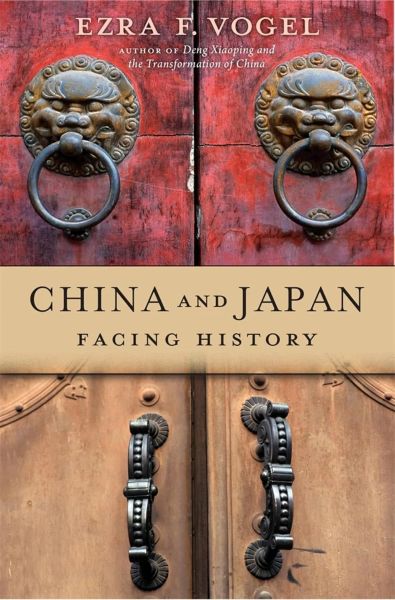
If I were to use one phrase to describe the relationship between China and Japan, it would be “a complex web of love, hate, and historical grievances”. This book is a work that focuses precisely on the ties between these two nations, specifically highlighting three historical periods of intense mutual learning: the Sui and Tang Dynasties, the late Qing and early Republic era, and the Reform and Opening-up period. For those who seek to understand these emotions without prior knowledge, or for those who know the history of only one side and wish to understand the other, this is undoubtedly the most objective and balanced recommendation. As Professor Ezra Vogel wrote in the book:
I understand that many Chinese or Japanese who dislike the other country will not be interested in a book about Sino-Japanese relations written by a Westerner; no matter how accurate it is, it might be in vain. However, this book is written for those in both countries who, like me, hope that China and Japan can understand each other. As an onlooker who has readers in both countries, I feel this is my responsibility.
The greatest gain I derived from this book was not a brand-new discovery of familiar history, but rather the “positive energy” and emotional warmth it conveyed. This was Professor Vogel’s final publication before his passing. After a lifetime of researching China and Japan, he placed his final emotional hopes on this work. I can only describe my feelings as “Kan-muryo” (overwhelmed with deep emotion).
In the translator’s preface of the Chinese edition, there is a thought-provoking passage:
A Western scholar once vividly summarized the recent friction between China and Japan with two phrases: “I’m sorry” and “Thank you”. China constantly accuses Japan of saying “I’m sorry” too rarely and without enough sincerity. Meanwhile, Japan feels that since the Reform and Opening-up, China has achieved its economic miracle largely due to massive Japanese economic aid, yet has never fully expressed gratitude or uttered a proper “Thank you”.
Actually, this sentiment could equally describe the relationship between South Korea and Japan. I once saw a popular Japanese politician state during a live broadcast that Korea should be more grateful to Japan because Japan brought “progress” during the colonial period. Yet, when I step among the people—in my own life—I have never seen individuals arguing until they are red in the face over national disputes. More often, what I experience are scenes of laughter, like Chinese and Japanese colleagues in my company singing The Flower of Woman together at a Karaoke bar.
Hermann Hesse once said: “I am happy to be a patriot, but first of all I am a ‘human’. If the two cannot be reconciled, I will always choose the ‘human’.” Both of my grandfathers were old revolutionaries and veteran Party members, yet I never heard a single word of hatred from them. Like Professor Vogel, their most simple and sincere sentiment was to cherish peace and long for a friendship that lasts forever.
Looking back at that red cloth from my childhood and the long arc of history, did our ancestors not also splash their ink across the scroll titled “A Narrow Ribbon of Water”? I hope our generation, and all the generations after us, can pass down the beautiful virtues of being a “human.” Perhaps that is the ultimate message this book intends to deliver to us.
ブログ
-
China and Japan: Facing History
-
Good Economics for Hard Times: Better Answers to Our Biggest Problems
At the final shareholder meeting where Warren Buffett presided as CEO of Berkshire Hathaway, he addressed a question from a Chinese attendee with these words: ” You were born at a good time. If you look all the way through the history of China, when would you rather have been born? 100 years ago, 500 years ago, 1,000 years ago, or now? It’s just hands down – you’ve been lucky.”
Indeed, the era we live in is a “great time.” As revealed in the book Factfulness, the truth about the world is, in many ways, far better than most people imagine. However, what happens when we zoom in to the level of the individual? If I were to ask: Are you satisfied with the current social environment and economic climate? Are you filled with anxiety about your future life? Are you living happily? We might very well arrive at a completely different conclusion—that the era we live in remains a “hard time”.
On Immigration: Whenever I see political groups scapegoat immigrants for social problems and gain high approval ratings, I suspect that society is undergoing significant hardship. But is what politicians say the truth? Shouldn’t we also listen to the perspectives of economists to understand the actual impact of immigration on the economy?
On Free Trade: When certain countries begin to use tariff barriers to besiege trade liberalization, gradually escalating it into a global-scale conflict, I feel deeply that we are mired in a hard time. “There are no winners in war” is a cliché, yet it remains true. So, how do economists perceive the issue of free trade?
On Economic Growth: In the book The Refusal of Work, the author calls from a sociological perspective for us to “fundamentally abandon the outdated thinking that measures a nation’s prosperity by economic growth”. Yet, from a political standpoint, abandoning growth means losing leverage in the strategic game between nations. How do economists view this dilemma?
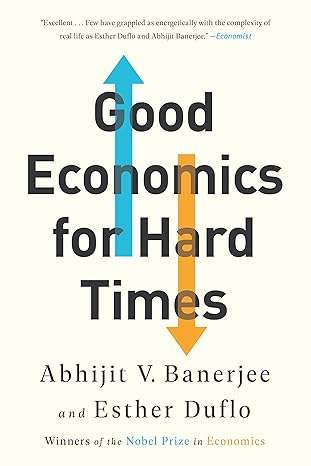
Good Economics for Hard Times is precisely such a book—it articulates economic problems through the eyes of experts. The book covers a broad spectrum of themes with robust argumentation, making it an excellent and accessible read on macroeconomics.
In conclusion, we live in a great time, but simultaneously, a hard time. How we transform these difficulties into something better requires the concern and participation of every individual. As the authors of this book suggest: “Economics is too important to be left to the economists.” -
The Refusal of Work: The Theory and Practice of Resistance to Work
If I were to ask you: “When does your workday truly begin, and when does it genuinely end?” Most people would find this easy to answer—referring to the moment they enter the office or the stamp on their timecard.
But upon reflection, the reality is far more complex. Even during non-working hours, our lives are incessantly influenced and dictated by work. “Having work to handle” has become a universally accepted justification to instantly abandon our private lives. Whether planning a trip or visiting a doctor, we only feel at ease once all work-related matters are settled.
The latent purpose of non-working time is merely to prepare people for the restart of work: Free time is not free at all.
This is because the world adheres to a value system where work equals justice and work equals morality. Guided by this ethos, many take it for granted that they live for work. But in the relationship between work and life, which should be the means and which the end?
Unfortunately, one almost never hears the phrase: “Life is justice; life is morality.” Take myself as an example: during the “honeymoon phase” of my first few years at the company, I always felt long holidays were too long. By the end of a seven-day Golden Week, I would start feeling bored, eager to rush back to the office.
Bertrand Russell once noted that if people fear the increase of leisure will lead to boredom, we should view this as “a condemnation of our current civilization.”
Our era does not condemn the boredom of leisure; it condemns the act of not working. Not working is seen as injustice; not working is seen as immorality. Consider the one question that invariably comes up in any introduction: “What do you do?”
“What do you do?” really means: “Summarize your contribution to the world in one sentence, and I will judge you based on your answer.” Or perhaps it is asking: “Are you a person worth knowing?”
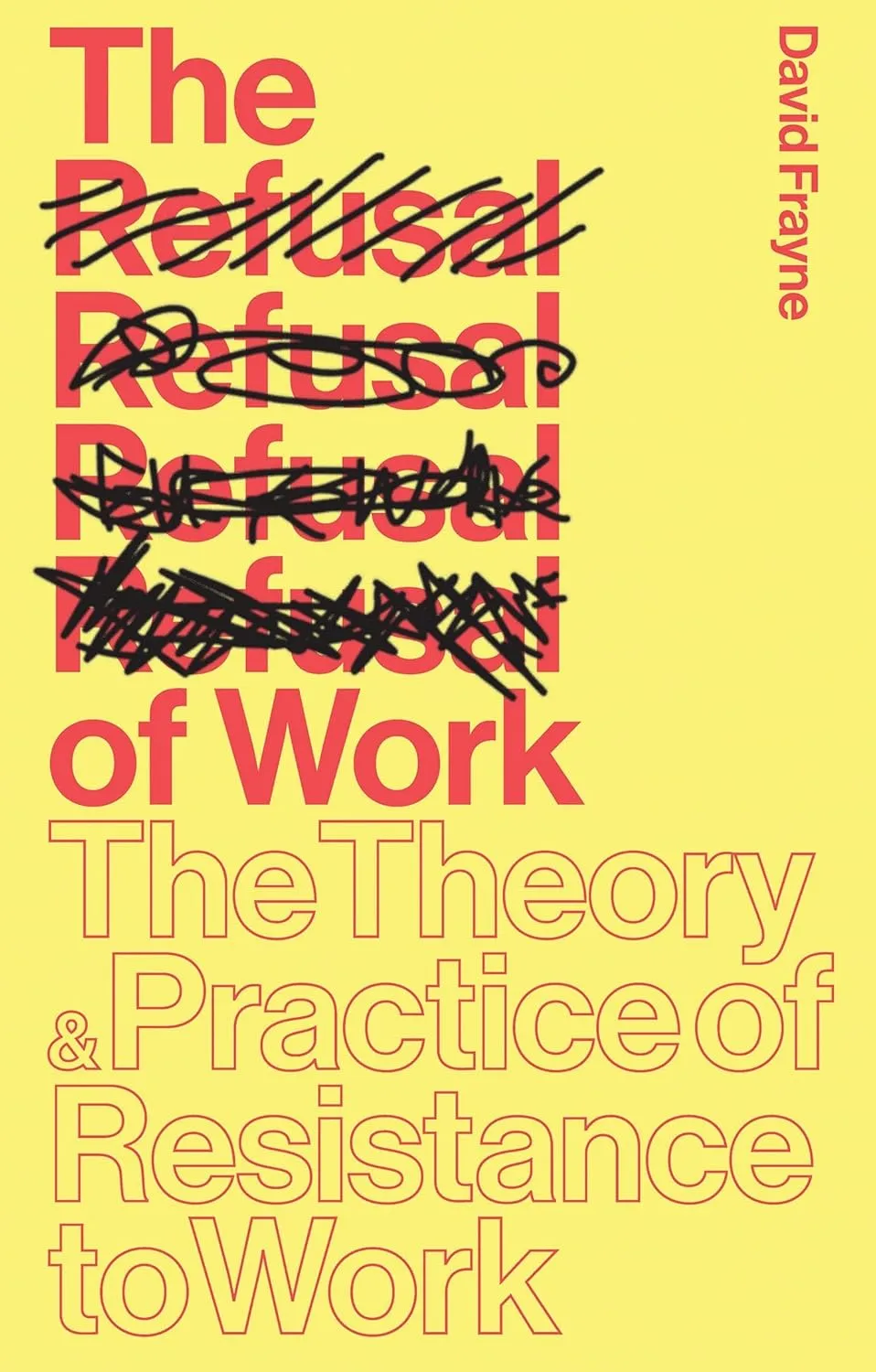
However, in this same era, we see a segment of the population beginning to question the meaning and importance of work in modern society—whether they have “awakened” due to personal crises or have been forced into “lying flat” by social circumstances. In the current age of the AI revolution, the reflections in this book are exactly what our generation and those to follow require. This is not to say we must immediately “refuse work” entirely. Rather, it is as the author suggests:
I hope to see a vibrant and progressive debate about the meaning and future of work. I want us to remember that nine-to-five, Monday-to-Friday work is a relatively recent invention, and to explore other possible ways of distributing work. I want us to think about alternative avenues for the joy and solidarity traditionally sought in work. I hope we can defend the right to pursue a diverse and meaningful life outside of work, and seek ways of self-realization that are less complicit in the profit-seeking games of capitalism. This requires us to fundamentally abandon the outdated thinking that measures a nation’s prosperity by economic growth, and to embrace a different vision of human progress and happiness—one grounded in non-material wealth such as health, free time, and the right to realize one’s own potential. -
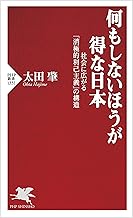
Japan, Where It Pays to Do Nothing: The Structure of ‘Passive Egoism’ Spreading in Society
In my first year at the company, during the year-end party, I happened to be seated next to the president. Upon learning I had just joined, he said something profoundly meaningful: “To someone who has just started, everything around you must still feel very fresh…”
The true weight, however, lay not in what he said, but in the half he left unspoken: “…In a few years, you’ll end up just like everyone else.”
Indeed, those first few years were fresh and filled with passion. But as time passed, I began to feel something was off—an underlying discomfort I couldn’t quite name. I wanted to understand why, and I finally found the answers in the works of Professor Hajime Ohta, a leading authority in the sociology of Japanese organizations.
The title of one of Professor Ohta’s books, Japanese Organizations That Don’t Make Individuals Happy, is incredibly piercing. Why have Japanese-style organizations become a shackle to personal happiness? In his book The Reality of Peer Pressure, Ohta points out that the root cause lies in the “Three Sacred Treasures” of Japanese corporations: lifetime employment, the seniority-based wage system, and enterprise-specific unions. In the “Golden Age” of the past, these three pillars safeguarded the nation’s prosperity. But times have changed, and in today’s social context, they have created exactly what the title describes: a Japan where “doing nothing pays off”.
Looking around, this phenomenon is pervasive. Once they reach a certain rank, many employees stop striving and start “coasting”. Because of the seniority system, there are no higher positions to strive for even with effort. Conversely, the personnel evaluation system is rooted in “subtraction-based evaluation”, making a risk-averse, “don’t-stick-your-neck-out” style the ultimate strategy for survival. Furthermore, lifetime employment means companies cannot easily shed redundant labor, so “slacking off” on the clock carries no threat of dismissal. Meanwhile, enterprise unions, their interests tied directly to the company’s bottom line, have extremely weak bargaining power, rendering professional ambition a meaningless sentiment. All of this has led to a growing army of “old-timers” who cling to a philosophy of passive egoism. Such organizations can neither foster innovation nor hold their ground in the wave of globalization.
Currently, we are witnessing the signs of collapse in Japanese organizational structures: the turnover rate for new hires is climbing; fewer veteran employees aspire to management roles; wage growth cannot keep pace with inflation; and some companies have even begun introducing demotion-based evaluations for those who fail to meet standards.
Every time I read Professor Ohta’s books, I feel a deep sense of resonance, yet I always look forward to seeing what “prescription” he might offer for these ailments. For a long time, I felt his suggestions lacked a certain decisiveness. This is likely not due to a lack of skill on the author’s part, but because the structural rot of the Japanese organization has permeated society too deeply. Fortunately, in his latest work, Zero Turnover: ‘Self-Employed Style’ Employees Will Change the Company!, he finally presents a viable antidote. While it may not be a panacea for all ills, it at least offers a glimmer of hope. -
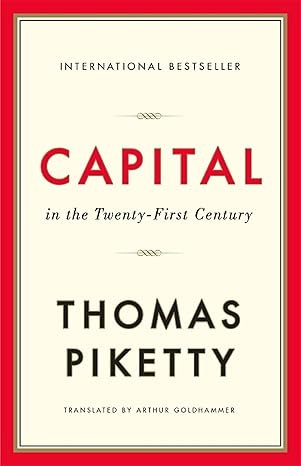
Capital in the Twenty-First Century
It is strange to think that I never formally studied “economics” in a classroom. If any economic knowledge remains from my schooling, it is likely just a few fragments of Marx’s “theory of surplus value”. Yet, as members of society, while we might loudly proclaim our indifference toward philosophy, history, or politics—or return every math, physics and chemistry formula to our teachers—we can never claim that “the economy” has nothing to do with us.
There is a popular business and finance channel on YouTube called “Xiao Lin Shuo”, boasting millions of subscribers, of which I am a loyal viewer. I remember in an early episode about book recommendations, she suggested highly narrative works like When Genius Failed, Too Big to Fail, and Freakonomics. However, she left a void when it came to books on macroeconomics. If I were to fill that void, my first choice would be Capital in the Twenty-First Century.
Allow me to briefly share why I admire this book.
First, it is an immensely ambitious work. I have read many “ambitious” books, but most of them either indulge in vague generalities, mistake a part for the whole, or suffer from loose structures and unclear themes. Capital in the Twenty-First Century is a clear exception. Its theme is the historical evolution and consequences of the wealth gap (or inequality in wealth distribution), and its ambition spans the entire globe. Speaking of ambition, Napoleon’s dream of conquering the world with cavalry and cannons failed, but Thomas Piketty has succeeded in laying bare the truths of this world through a single book.
Secondly, this book does not just tell us how the world is; it seeks to uncover the deep-seated reasons why it is this way. This involves a wealth of economic concepts and analytical research, which admittedly makes it a challenging read. Even economics students find it difficult, let alone a novice like me with no formal background in the subject. But dear reader, do not let the word “difficult” deter you; the parts we can understand are already enough to provide profound enlightenment.
Lastly, if we agree that the wealth gap is a problem that must be solved, we require a prescription—and Piketty is bold enough to offer one. This is perhaps the most widely debated section of the book. In my view, of all academic disciplines, economics is the one most prone to disagreement. I am well aware that macroeconomic issues cannot be settled overnight or with a single masterstroke. However, I admire the author’s spirit of “tossing out a brick to attract jade”—inviting further discussion. Progress in thought and institution can only occur when everyone joins the debate, can it not? -

The Story of My Life
Recently I was visited by a very good friend who had just returned from a long walk in the woods, and I asked her what she had observed. ‘Nothing in particular,’ she replied. I might have been incredulous had I not been accustomed to such responses, for long ago I became convinced that the seeing see little.
—— Helen Keller, Three Days to See
If I were to summarize Helen Keller’s life in a single sentence, none would be more fitting than these words by Romain Rolland:
“There is only one true heroism in the world: to see the world as it is, and to love it.” -
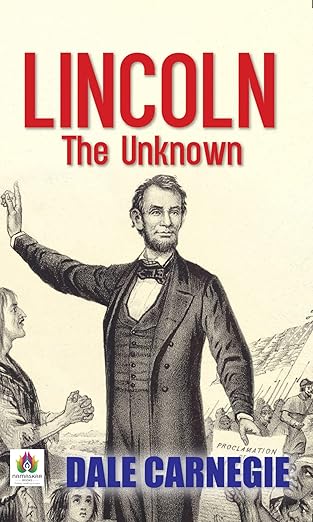
Lincoln the Unknown
When Heaven is about to confer a great responsibility on any man, it will first exercise his mind with suffering, subject his sinews and bones to hard work, expose his body to hunger, and confound his undertakings. In this way, it stimulates his mind, hardens his nature, and makes up for his deficiencies.
—— Mencius
Is Lincoln a great man?
No, Lincoln is not a great man.
Lincoln is a Saint. -
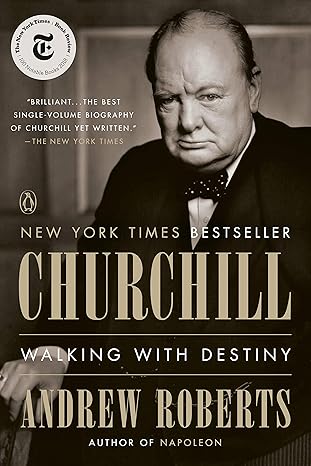
Churchill: Walking with Destiny
We are left sad and sorrowful in the dark, until the stars light up and remind us that there is always something beyond.
—— Winston Churchill, The River War
For the longest time, my understanding of Churchill was limited to a few lines in history textbooks; of the man himself, I knew next to nothing. Noticing how many people were reading about him, I picked up this masterpiece out of curiosity—and found myself utterly enthralled, unable to put it down.
Who exactly was Winston Churchill? In the epilogue, the author uses some thirty-odd nouns to define his identity. Allow me to follow suit and “teach a fish how to swim” by selecting a few of my own.
First, Churchill was a genuine aristocrat. Throughout his life, he required attendants for his daily routines; his noble upbringing meant he lacked even the most basic survival skills, like cooking a meal. Yet, simultaneously, he was a servant—dedicating his entire life to his country and laboring tirelessly for his people.
In times of war, Churchill was the ultimate Binder-in-Chief. He personally toiled to lash together allies being battered in the East with those reluctant to be battered in the West. This role turned him into a prolific traveler. As the book notes:
During his 1,900 days as Prime Minister and Minister of Defence, he traveled 110,000 miles by ship, train, and plane. He visited Cairo four times; Washington and Moscow three times each; Quebec twice; plus Bermuda, Tehran, Casablanca, Italy, Normandy, Paris, Malta, Yalta, Athens, Belgium, and Berlin.
Churchill was an extraordinary writer and orator. The Nobel Prize in Literature remains his crowning glory, awarded “for his mastery of historical and biographical description as well as for brilliant oratory in defending exalted human values”. He was also a natural wit. For instance, upon arriving in newly liberated Paris, he warned his audience before beginning his speech:
“I must warn you; be careful, for I intend—or rather, I shall try—to speak in French. This is a formidable task that will surely test your friendship for Great Britain.”
Finally, Churchill was an unabashed crybaby. Perhaps thanks to this emotional release, despite his excessive drinking, he lived to the ripe old age of 90, becoming a symbol of longevity. He outlived so many familiar faces: his King, his colleagues, his allies. In his twilight years, he became a political mascot and a living legend—an idol chased by rising stars.
Churchill’s life is the perfect embodiment of the word “Greatness”. To have lived a life as full as his is, beyond any doubt, a life well-spent. -
Haruko Obokata’s Diary
After finishing Haruko Obokata’s memoir, The Day, a profound restlessness lingered in my heart for a long time. It was not because of the scientific truth, but because I saw the truth of our society—its coldness and its utter ruthlessness.
When I felt my life was reaching its end, regardless of my own will, what floated before my eyes was the flame of a candle, flickering as if it might vanish at any moment.
Life is like a faint candlelight, swaying helplessly in this cold, grey world. The melancholy that shrouds the entire body; the physical form ravaged by illness; the sleepless nights—even when sleep is sought through the power of medication, it is nothing but a succession of nightmares until the moment of waking. Anger, resentment, doubt, loneliness, and fear… every waking second is occupied by these negative emotions. And the only shield left to fend them off is an endless stream of tears. How does one go on living?
The frantic desire for that flame not to vanish was pure instinct. Having experienced that desperation countless times, I fought to protect it even while being driven by the sudden impulse to just blow it out once and for all.
Is it hope? That final thing sealed at the bottom of Pandora’s box. A hope that is visible but forever out of reach. A hope that exists only to make the living endure agonizing torture time and time again. A ridiculous hope. A sinful hope. No, it is not hope; there must be something else in this world, a different kind of strength that keeps a person alive.
I always thought I was guarding my flame all by myself. But I realized then that even when my candle was about to go out, there were people there to share their flame with me.
It is the connection between human beings. It is the friendship from one’s most trusted confidants. It is the affection from one’s closest family. It is the sympathy from those in society who understand, encourage, and help. It is the empathy from everyone who treats one simply as a fellow human being. It is Love. It is only with love that this world gradually gains warmth and regains its color.
I will live on, passing the flame shared with me to someone else. That is what I intend to write in today’s diary.
As I reached the final line, tears finally broke through and streamed down my face.