
There is a junior colleague in my company who joined just a few years ago. He mentioned that his ultimate goal right now is FIRE (Financial Independence, Retire Early). If you had such a junior, a family member, or a friend, what advice would you give them? Would you encourage them to boldly pursue their grand ideals, or would you dissuade them by reminding them of the harshness of reality?
My view is that, first and foremost, I support any young person who harbors the dream of FIRE. However, the crucial point lies in how one goes about achieving it. On the path to financial freedom, too many people are in too much of a hurry for overnight success. They are overly blind, treating money as a stake to be squandered in a gamble. Cryptocurrency, FX, financial leverage, futures, options… these terms are like modern-day versions of “Open Sesame”, seemingly possessed of a magical power. But do not forget: while “Open Sesame” might bring you overnight wealth, it can just as easily cost you your life.
The pursuit of freedom should not be a high-stakes gamble. “If I lose the bet, at worst I’ll just go back to the grind.”—I believe no rational person would willingly face such a fate. Therefore, we need a solid strategy, much like climbing a staircase, ascending step by step. And this is precisely why I recommend this book.
To achieve the goal of FIRE, we must accumulate a pool of assets that allows us to live comfortably without having to work. This book imparts an important truth: what you must do varies distinctly depending on the stage of your assets. For someone with an asset base of $10,000 or less, the focus to reach the next tier must be entirely on increasing one’s active income. If the current goal is to elevate assets from $100,000 to $1 million, the gains from labor income might become quite limited; at this stage, one must rely on investment and financial management. And if your dream is to own a private jet, then you must possess a business enterprise capable of sustaining such expenses.
In conclusion, I would like to add one final thought, especially for those readers whose ultimate goal is FIRE:As you climb the wealth ladder, do not focus solely on how to make money. Instead, pause from time to time and ask yourself: Why do I need this much money? Does true freedom simply mean endless leisure? Do I possess a calling—a vocation—to which I am genuinely willing to dedicate my time and energy? It is precisely through this process of self-examination that we may grasp the true meaning of life, thereby making the ideals in our hearts much easier to attain.
At the very, very end, no matter which rung of the wealth ladder you currently stand on, never forget that reading remains one of the single best investments you can ever make in yourself.
ブログ
-
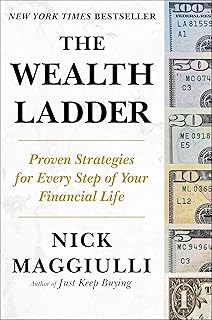
The Wealth Ladder: Proven Strategies for Every Step of Your Financial Life
-
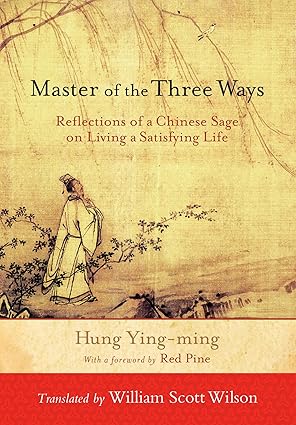
Caigentan
When it comes to classical works on the art of living, many naturally think of Marcus Aurelius’s Meditations. However, if I were to choose a representative from the East, it would be Caigentan (The Roots of Wisdom).
Ancient China was home to numerous philosophical schools, often summarized as the “Three Religions and Nine Schools”. The “Three Religions”—Confucianism, Taoism, and Buddhism—each have their own scriptures and tenets. Yet, Caigentan manages to weave the essence of all three into a single fabric, making it a truly extraordinary book.
The core of Confucianism lies in the emphasis on family, education, and ritual—values that continue to deeply influence the social fabric of China and its neighbors today. Furthermore, it teaches the “Zhongyong” (Doctrine of the Mean). What is the Mean? The following passage from the book captures it perfectly, perhaps revealing the root of the reserved, introspective, and humble character of the Eastern people:
In worldly affairs, one should neither drift with the current nor stubbornly defy it. In action, one should neither seek to annoy others nor strive solely to please them.
The essence of Taoism can be distilled into two concepts: “Wu Wei” (Non-action) and “Ziran” (Spontaneity/Nature). In the modern world, a state governed entirely by Wu Wei is hard to find. However, individuals pursuing a life of simplicity, detachment from desire, and harmony with nature are everywhere. As the book suggests:
One does not need grand achievements to be noble; to cast off worldly vanities is to enter the ranks of the elite. One does not need extraordinary scholarly effort to reach a sage-like state; to eliminate the obsession with material things is to transcend the ordinary.
Buddhism is a philosophy of “transcendence”. While I am considering elaborating further on the relationship between the secular and the transcendent more deeply in Oriental Philosophy, let us pause here to savor the poetic imagery of this verse:
A solitary cloud drifts out of the mountain valley, unattached whether it stays or goes; a bright mirror hangs in the void, undisturbed by either silence or clamor.
Lastly, I must mention that reading classical Chinese without annotations is, for me, like “looking at flowers through a fog”. Therefore, I deeply appreciate Professor Huo Mingkun’s edition. Not only is the modern translation brilliant, but the commentary accompanying each entry is truly insightful. For younger readers or those seeking a moment of peace in a busy day, the comic adaptations by Tsai Chih-chung are also an excellent choice. -
The Art of Loving
“What is love?” and “How do we love?” are questions that have confounded humanity since time immemorial. I did not open this book expecting the author to provide a flawlessly definitive answer. Yet, from the very first lines, I found myself utterly captivated by every word, yearning to deeply internalize the wisdom embedded within. Although it is a slender volume, it seamlessly encapsulates elements of Eastern and Western philosophy, psychology, natural sciences, sociology, and economics. Even when viewed through a contemporary lens, it feels almost entirely timeless.
Speaking of books feeling “out of touch” or disconnected from our reality, I would like to expand on this phenomenon.
How many times have we found ourselves turning page after page of a book, only to realize our minds have drifted into a daydream? When we snap out of it, we have absolutely no idea what those past few pages were about. At other times, when reading classical works, we might find their perspectives utterly inapplicable to modern society. Or, as an Easterner reading Western literature, I occasionally find the social settings and core values so foreign that they fail to resonate with me. This is especially true with self-help books; we often open them brimming with expectation, hoping for an epiphany to resolve our life’s dilemmas, only to walk away with very little. Regarding this, I would like to offer my dear readers a few modest pieces of advice.
First, to those who do not read—especially the younger generation—books seem to have become synonymous with obsolescence. We live in an era fraught with anxiety and insatiable desires, where our sense of security is derived solely from the pursuit of money and material possessions, and where our leisure time is spent numbing our senses with Netflix, TikTok, and alcohol. Yet, if we could dedicate just a small fraction of each day to reading, we might find ourselves much closer to the essence of life. For reading is the axe that breaks the frozen sea within us.
Second, this world is immensely complex and multifaceted. Even when confronting a single issue, we must mobilize theoretical knowledge from various disciplines and integrate multiple modes of thinking to truly comprehend it. When reading a book, we must consider the historical context in which the author wrote, examine our own lived experiences, and consciously adjust the relationship between ourselves and the text. We should extract the essence for our own use, rather than blindly believing everything—or conversely, dismissing everything—written in a book.
Finally, if a book fails to truly move us while we are reading it, there is absolutely no need to waste our time on it. Just as we do not force ourselves to swallow food that does not suit our palate, when we encounter a book that fails to interest us, one we cannot comprehend, or one whose content we dislike, we should decisively lay it down. There is no need to force ourselves through it. -
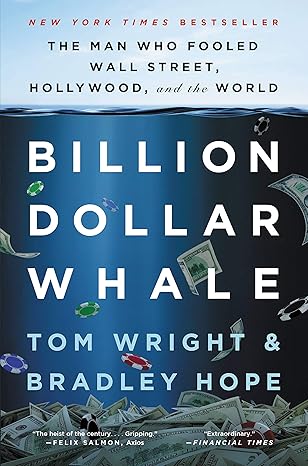
Billion Dollar Whale: The Man Who Fooled Wall Street, Hollywood, and the World
Many channels have covered Jho Low and his story from various angles, but none can match the power and depth of this book. A truly spectacular piece of documentary.
-
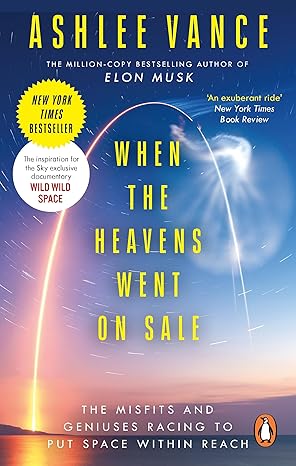
When the Heavens Went on Sale: The Misfits and Geniuses Racing to Put Space Within Reach
This book chronicles the figures and stories behind four space companies. As humanity begins to extend commerce into the cosmos, it reveals the countless triumphs and failures that have shaped this journey.
-
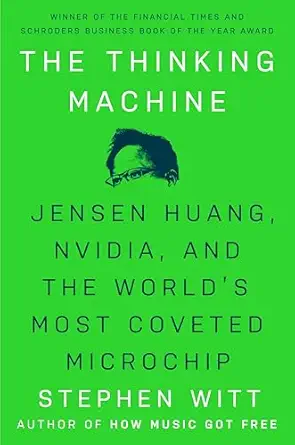
The Thinking Machine: Jensen Huang, Nvidia, and the World’s Most Coveted Microchip
In 2024, with NVIDIA being one of the most valuable companies in the world and Jensen a billionaire many times over, readers might think I was trying to “climb high” back in 2013. In truth, at the end of 2013, NVIDIA’s market cap was only $9 billion—one-tenth of TSMC’s $90 billion. Jensen’s wealth back then was merely a single-digit percentage of that. I wasn’t “climbing”. Jensen’s answer to me was simply honest: he “already had a job”. His job was to elevate NVIDIA to the heights it has reached today, eleven years later.
— Morris Chang, Autobiography of Morris Chang: Volume II (1964–2018)
For a long time, my perception of NVIDIA was merely that of a company selling gaming graphics cards. Today, however, the countless entities of this planet have formed a massive fleet, setting sail to explore the mysterious and infinitely promising vastness of Artificial Intelligence. The flagship leading this fleet, and the commander at its helm, are none other than NVIDIA and Jensen Huang.
Morris Chang, former CEO of TSMC, shared a poignant anecdote in his autobiography: when he was considering retirement, he thought of asking his long-time friend of over a decade, Jensen Huang, to be his successor. Yet, to the olive branches Chang extended on two separate occasions, Jensen gave a simple, consistent reply: “I already have a job.”
Did Jensen foresee NVIDIA’s current monumental success back then? Some might argue that NVIDIA’s current status is purely a stroke of luck. But as Jensen himself puts it, NVIDIA’s success is “luck based on vision”. And that vision is rooted in nothing more than his unwavering passion for the “job” he has held for over thirty years, from NVIDIA’s inception to the present day.
This book is not merely a biography exploring Jensen Huang’s family background and personal journey; it is equally a compelling journalistic account of NVIDIA’s evolution and the broader development of the graphics card and AI industries. Furthermore, the author does not shy away from documenting the “conflicts” between himself and the protagonist. This is precisely where the joy of reading in-depth reporting lies—depth often manifests in the passionate collision of differing values. -
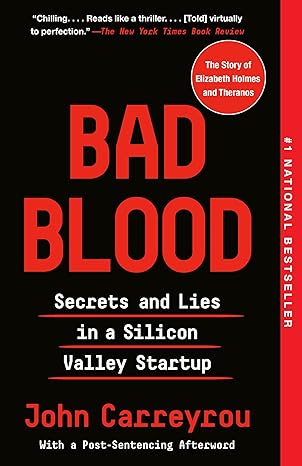
Bad Blood: Secrets and Lies in a Silicon Valley Startup
When it comes to physical exams, some might wonder: why do we need to draw two or three vials of blood? Isn’t one enough?
The reason is that blood tests analyze dozens of different components—such as various blood cell counts or concentrations of specific proteins that serve as health indicators. To detect these diverse elements, samples must undergo different pre-treatments before being sent to specialized instruments.
But what if a company claimed to have developed a device that could run hundreds of tests using just a single drop of blood? What would your first reaction be?
For modern people who believe in the boundless possibilities of technological innovation, this hardly sounds like a fairy tale. In fact, one company claimed to have achieved exactly that. This is the story of Theranos and its founder, Elizabeth Holmes.
Theranos was ultimately exposed as an unmitigated fraud, and Holmes could not escape her fate behind bars. But how did she manage to pull the wool over everyone’s eyes for so many years—deceiving employees, investors, regulators, and finally, consumers? In my view, the primary reason was “self-deception”. Holmes fell for her own lie. As noted in A Philosophy of Lying, quoting Nietzsche:
All great deceivers owe their power to a remarkable trait: in the actual act of deception, amidst all the preparations—the seductive voice, the calculated expressions and gestures—the true pivot is that the deceiver ‘believes in themselves’. It is this conviction that allows them to speak with such eloquence that everyone around them is swept into belief.
As a professional in the medical device industry, another fascinating aspect of this book is how Theranos bypassed the FDA—the world’s most stringent medical regulatory body. Simply put, Theranos wasn’t selling medical hardware subject to FDA clearance; instead, they offered “Laboratory Developed Tests”, a service historically less constrained by federal regulations. This case vividly illustrates why the FDA has been so determined in recent years to reform and tighten the oversight of clinical laboratory testing.
As time passes, Theranos has faded like drifting smoke. Yet today, we see the emergence of a novel (and compliant) medical model in the U.S.: consumers can collect blood samples at home using micro-collection tubes and mail them to accredited labs. Medical experts then provide online consultations and prescriptions based on the results, and medications are delivered directly to the doorstep. Perhaps one day, the vision of “testing with a single drop” will finally be realized. Under the banner of true scientific innovation, “impossible is nothing”. -

The Russo-Ukrainian War: The Return of History
This book elucidates the historical origins linking Ukraine and Russia, analyzes the root causes of the Russia-Ukraine war by examining a sequence of historical events following the dissolution of the Soviet Union, and evaluates its deep-seated implications for the global order.
-
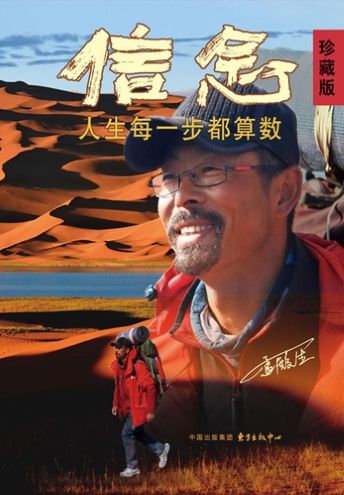
Faith: No Step of Life is Taken in Vain
A decadal trek across Cathay: beholding the boundless rivers and mountains, discovering the soul of local customs, and awakening to the ultimate truths along the winding path of life.
-
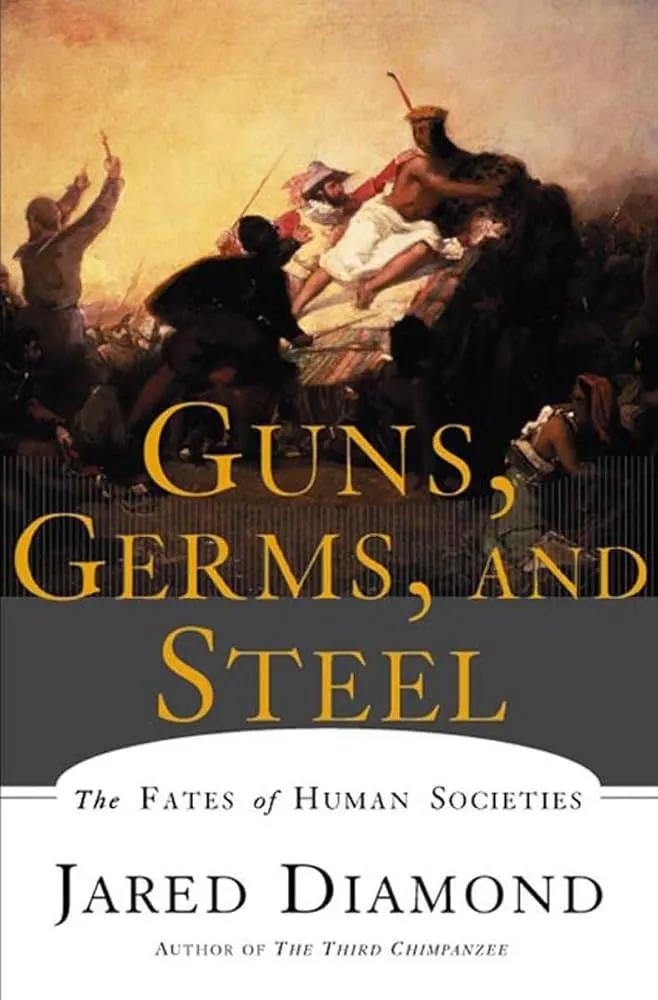
Guns, Germs, and Steel: The Fates of Human Societies
This person is too lazy to leave anything behind.