
Whenever I chat with people, the topic of MBTI often comes up. And whenever I learn that someone is an INTP, I always say with a smile, “Oh, so you’re the ‘Einstein’ type.” Almost invariably, the response is: “Oh, not at all! How could a lazy person like me ever be compared to a genius?”
Indeed, for most of us, the name “Einstein” is so monumental that we can only gaze at it from a distance with silent awe. Finding common ground with him feels almost sacrilegious.
However, I would argue that Einstein was not a “Great Man” in the detached sense; he was, like you and me, a “Mortal.”
What is the difference between a “Great Man” and a “Mortal”? To me, the greatest distinction lies here: A Great Man walks in step with the destiny of humanity, whereas a Mortal, at times, cannot even control their own fate.
In Einstein, we see many personality traits that mirror our own. He was proud and rebellious, yet he had to compromise with life for a steady income, working quietly in a patent office. He performed miracles but also made stubborn mistakes. He used a spirit of skepticism to challenge the academic stagnation of others, yet when confronted with the “entanglements” of new theories, he chose to retreat into his own “field,” refusing to doubt a “God who does not play dice.” He loved peace and cherished freedom, yet in those turbulent years, he found himself adrift—homeless and swept along by forces beyond his control.
The book records a beautiful anecdote: Once, Einstein and Charlie Chaplin walked into a theater together to a standing ovation. Chaplin remarked, “They cheer for me because they understand me; they cheer for you because nobody understands you.”
To be misunderstood is to be lonely. Is there any solitude deeper than that? Einstein’s loneliness was the same as ours—the solitude of a mortal.
Einstein was both a genius and a mortal. After reading this book, perhaps you will agree. So, the next time I meet an INTP like you, maybe I’ll hear you say with a smile: “That’s right. I’m just like Einstein.”
ブログ
-
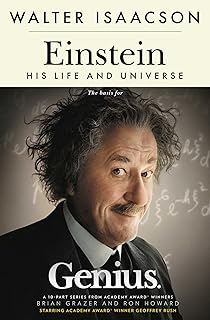
Einstein: His Life and Universe
-
Understanding the Risks of Disease and Injury Through Blood Type
This book is a popular science work written by my doctoral advisor. Within its pages lies every piece of scientific knowledge you could possibly want to know about blood types. Even for me, some of the content felt incredibly fresh. Reading Sensei’s approachable and accessible tone, I couldn’t help but be transported back to those days when he would personally carve out extra time just to walk us international students through the fundamentals of carbohydrate chemistry.
-
Why We Sleep: The New Science of Sleep and Dreams
I used to be a quintessential night owl. However, after making a conscious effort to change my routine, I gradually grew accustomed to a life without late nights.
Modern society tends to label night owls as “lazy.” After all, while others have already begun their study or work, you are still fast asleep. You might disagree with this “discriminatory” view, but consider this: how many “successful people” around you proudly claim that their success is due to sleeping until noon every day?
I don’t believe night owls are inherently lazy. To some extent, our sleep habits are dictated by our genes. Looking back at the era of our hunter-gatherer ancestors, someone had to stay awake deep into the night to stand guard and ensure the tribe’s safety. However, if you use this as an excuse to give up on improving your lifestyle, then I would indeed call you “lazy.” Laziness is not defined by your genes, but by your attitude. Furthermore, evidence shows that with practice, even a night owl can adjust and become an early bird.
That being said, please do not misunderstand the book I am introducing. This is not a guide on how to stop being a night owl. It is a scientific work about the essence of sleep, its functions, and how to sleep healthily.
My greatest takeaway after reading this book is the realization of just how vital sleep is to our health. As the author emphasizes: among the three pillars of health—sleep, diet, and exercise—sleep is the fundamental foundation. This book helped me cultivate a new habit, or more accurately, a conscious mindset: I must sleep well. -
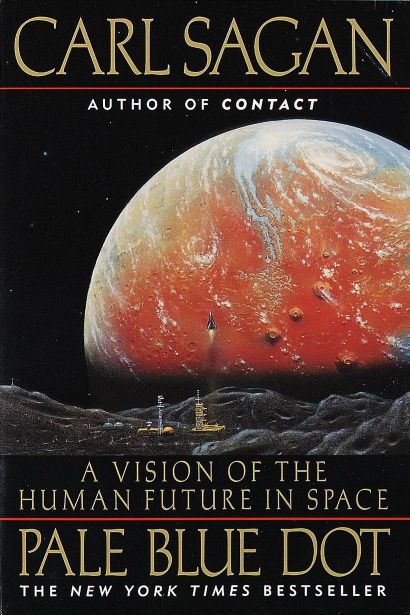
Pale Blue Dot: A Vision of the Human Future in Space
On Immanuel Kant’s epitaph, there is a famous passage from his Critique of Practical Reason: “Two things fill the mind with ever-new and increasing admiration and awe, the more often and steadily we reflect upon them: the starry heavens above me and the moral law within me.”
Indeed, astronomers lead our gaze toward the external universe, while philosophers turn our eyes toward the inner self. But Carl Sagan is different; he allows us to see both at once.
Personally, I find Pale Blue Dot even more compelling than Cosmos. Its layers are richer—it offers a rational scrutiny of human history, profound philosophical inquiry, and lucid scientific explanations of astronomical discoveries. Beyond that, it approaches the social issues of our reality with a deeply humanistic heart, envisioning the future of our species.
Faced with the starry heavens, Kant was filled with admiration and awe. Sagan, however, wrote: “It has been said that astronomy is a humbling and character-building experience.” For me, whenever I pick up a book on astronomy and use the magic of words to journey into the cosmos—looking back from that cosmic perspective at my own existence, infinitely small and fleeting on that pale blue dot—I feel an immediate sense of liberation. In that moment, the petty struggles and trivialities of daily life simply melt away. -
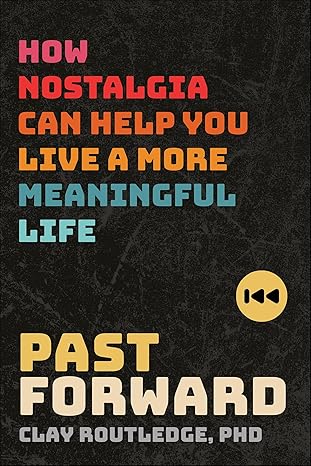
Past Forward: How Nostalgia Can Help You Live a More Meaningful Life
Once upon a time, I held a somewhat negative view of the word “nostalgia.” Whenever I heard a young person reminiscing emotionally about the “good old days,” I couldn’t help but feel a twinge of pity, as if their heart had grown old before their body. Shouldn’t we always be looking forward? Could the meaning of life truly be reduced to replaying past achievements? And when I saw society as a whole becoming immersed in a nostalgic atmosphere, I felt certain that something, somewhere, had gone wrong.
However, this book has dissolved my prejudices and given me a brand-new understanding of the positive role nostalgia plays.
Let’s look at some of the constructive functions of nostalgia:
——In the face of hardships that threaten to break our sense of identity, nostalgia enhances our feeling of “self-continuity.”
——Nostalgia reduces defensiveness, making us more open to criticism and advice while fostering a healthy level of self-esteem.
——Collective nostalgia strengthens group identity and inspires the motivation needed for a community to thrive.
——While it cannot turn back the clock, nostalgia truly helps in maintaining a youthful heart.
——Nostalgia not only enhances the meaning of our future but also restores the significance of our past.
——In an era where the internet fuels political polarization and chaos, nostalgia serves as a stabilizing force.
Ultimately, the author shares a vital insight:
Human nature is progress-oriented. Although we have a conservative side, we must first be stable in all aspects to flourish; otherwise, it is easy to lose ourselves in a chaotic world. Remember, humans are future-oriented. By seeking inspiration and guidance from precious memories, we can build a better tomorrow. Nostalgia is not a weakness of human nature, but an undeniable positive force. -
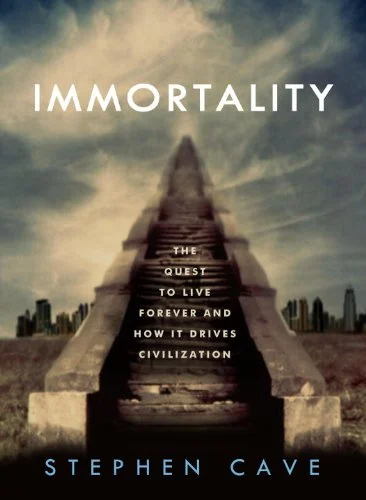
Immortality: The Quest to Live Forever and How It Drives Civilization
To philosophize is to learn how to die.
— Michel de Montaigne, The Essays
What is life?
Life is but “a brief crack of light between two eternities of darkness.” Thus did Vladimir Nabokov set a desolate keynote for human existence. This crack of light is so narrow that the moment we open our eyes to glimpse the world’s silhouette, we can already hear the approaching footsteps of the dusk.
This book reveals a profound truth: the grand epic of human civilization is, in essence, our desperate attempt to hold onto that flicker of light for as long as possible between those two “eternities of darkness.” We crave eternal youth; we long for resurrection; we yearn for the immortality of the soul—or at the very least, we hope to leave behind a lingering glow called “legacy” after all has turned to dust.
Civilization is indeed a byproduct of fear. Because we fear death, we built the pyramids, captured eternal smiles on canvas, and now attempt to upload our consciousness into the cloud. Death acts like a stern taskmaster, whipping humanity to extract eternity from the fleeting passage of time. However, in the final chapter, the author reminds us that our efforts to escape death through technology or fame often cause us to lose “life” itself on the road to “immortality.” The meaning of life is perhaps best captured by Leonardo da Vinci’s tender confession: “As a well-spent day brings happy sleep, so a life well spent brings happy death.”
You, dear reader, might be dissatisfied with the author’s conclusion: “Is that it? But this doesn’t settle my anxiety!” If so, let us shift our perspective and look at Midlife: A Philosophical Guide. -
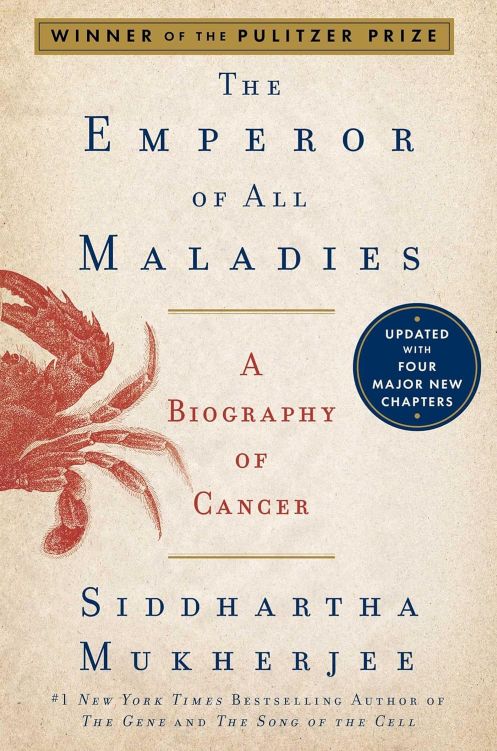
The Emperor of All Maladies: A Biography of Cancer
Siddhartha Mukherjee is my favorite popular science writer. He possesses a rare mastery of storytelling and professional expertise, all while infusing his prose with profound emotion. Few authors can balance these three elements in a single work, let alone execute each at a world-class level and weave them seamlessly into one cohesive theme.
This book is a history of humanity’s war against cancer, but it is equally a history of the progress of science and technology.
Cancer has haunted humanity since time immemorial. Ancient people understood it only through its surface symptoms: the Ancient Greeks called it a hard, domineering crab burrowed within us; the Ancient Chinese described it as something as unyielding as rock. Modern medicine tells us a different story: cancer is a rebellious program lurking within our genes, waiting to be activated to replicate, plunder, destroy, and expand. To describe it in philosophical terms: cancer is a dark version of the “self.” It is a self that craves immortality, wielding “dark magic” in a frantic attempt to break free from the destiny of decay and death. Yet, once this manic power becomes the master of our being, it consumes the fragile, original self without hesitation—only to inevitably march toward its own extinction in that very madness.
My doctoral thesis focused on cancer vaccine research, so reading this book often felt like hearing the echoes of knowledge and emotion resonating through my memories. On this road to defeating cancer, where have we been? Where are we now? How far are we from the finish line? The great pioneers have walked this path; they grew weary and eventually stopped. Thus, you and I have taken up the baton to continue the journey. One day, we too will grow weary and stop. But what does it matter? Our successors will follow in our footsteps, one after another, and they will go further than we ever could.
One characteristic of Mukherjee’s writing is that you don’t need profound professional knowledge to experience the joy of reading. His work can even stir your memories, bringing back bits and pieces of what you once learned in a classroom. If this book piques your interest, I would also highly recommend the author’s other two masterpieces: The Gene and The Song of the Cell. -
Psychology Hidden in Idioms
To my shame, the reason I started reading psychology books was that I simply didn’t read them. Once, I was asked what books I would recommend to someone interested in psychology. I searched my mind, only to realize I hadn’t read a single “serious” book on the subject, let alone have one to recommend. Since then, I’ve made a conscious effort to explore works in the field.
What is the use of psychology?
Back when psychoanalysis was first born, figures like Freud and Jung were not exactly welcomed in academia. This was because psychology was not considered “scientific.” In other words, it is a discipline where “right” or “wrong” cannot always be proven. If Freud were to point a finger at me and claim the root of my problems lay in a deep-seated Oedipus complex, and I reacted with fury, calling it nonsense—he would simply laugh and say my anger is the best evidence. How could I possibly refute that?
However, the author of this book, Yang Laoshi, writes:
The most important “root” of a therapeutic or personality theory lies in whether it can, and does, heal people—whether it makes them healthier. If the answer is yes, then being scientifically verifiable is merely the icing on the cake; if it cannot be verified, it matters little. The vast world has both clear patterns and chaotic depths. Therefore, we must hold this conviction: truths proven by experience and truths proven by science possess equal value. Both are vital resources that promote our healthy growth.
Today, no one doubts the value of psychology as a “useful” discipline. It has branched into numerous fields, permeating every aspect of our lives. Furthermore, as a supplement to Yang Laoshi’s brilliant summary, I’d like to quote Professor Richard Feynman:
We must reach the clear understanding from the beginning that if a thing is not a science, it is not necessarily bad. For example, love is not a science. So, if something is said not to be a science, it does not mean there is something wrong with it; it just means it is not a science.
If someone were to ask me now for a book suitable for beginners, I would first recommend Psychology Hidden in Idioms. The book focuses on explaining psychological terminology, using a Chinese idiom in each chapter to introduce a concept before delving deeper. Moreover, it is filled with life wisdom and witty remarks that teach us the art of living.
I found the following commentary on defense mechanisms particularly enlightening:
Although defense mechanisms operate at a subconscious level, understanding them helps us bring subconscious mental activities into our conscious awareness. This not only allows us to know ourselves more deeply but also enables us to catch up with our “second reactions,” aiding both self-awareness and the rational resolution of anxiety-inducing problems.
Indeed, for me, psychology is a discipline that allows me to rediscover myself. The more I understand who I am, the better I can become. -
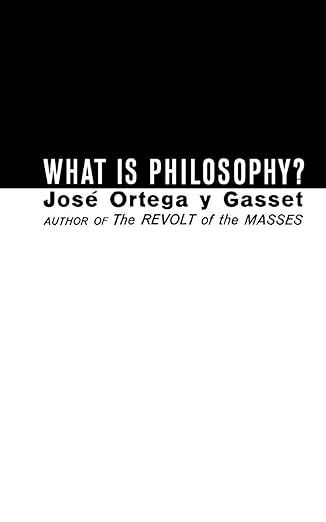
What is Philosophy?
What is philosophy?
Philosophy is the love (philo) of wisdom (sophy).
Is philosophy useful?
For me, it began as an exploration of the fear of death. But as I delved deeper, philosophical inquiry transformed into a way of being—a path toward living a better life. This book is a compilation of lectures by the Spanish master José Ortega y Gasset on the very question: “What is Philosophy?” The author offers profound insights into “what philosophy is”, “why we study it”, and “the nature of doubt and existence”. I found it immensely rewarding. There was a particular moment, while reading his brilliant exposition on Descartes, where I felt as if I’d been struck by lightning; I couldn’t help but gasp aloud. You have to understand, back in my school days, the orthodox philosophy was strictly Marxist materialism; anything resembling idealism was dismissed as heterodoxy.
So, what wisdom has philosophy given me?
I’m afraid I cannot answer that. As Hermann Hesse once said: “Knowledge can be communicated, but not wisdom.” Gasset echoes this sentiment:
What would one gain by sharing the results he hopes to find at the end of a difficult journey right at the start? Why should we begin our philosophical inquiry at the finish line?
If you, dear reader, wish to embark on your own philosophical journey, this book is an excellent starting point. And if some parts feel a bit dense, I’d suggest reaching for Immortality on the shelf next to it as a companion.