I used to be a quintessential night owl. However, after making a conscious effort to change my routine, I gradually grew accustomed to a life without late nights.
Modern society tends to label night owls as “lazy.” After all, while others have already begun their study or work, you are still fast asleep. You might disagree with this “discriminatory” view, but consider this: how many “successful people” around you proudly claim that their success is due to sleeping until noon every day?
I don’t believe night owls are inherently lazy. To some extent, our sleep habits are dictated by our genes. Looking back at the era of our hunter-gatherer ancestors, someone had to stay awake deep into the night to stand guard and ensure the tribe’s safety. However, if you use this as an excuse to give up on improving your lifestyle, then I would indeed call you “lazy.” Laziness is not defined by your genes, but by your attitude. Furthermore, evidence shows that with practice, even a night owl can adjust and become an early bird.
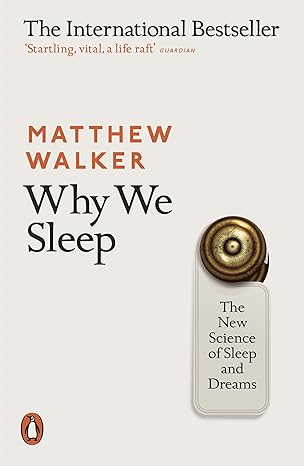
That being said, please do not misunderstand the book I am introducing. This is not a guide on how to stop being a night owl. It is a scientific work about the essence of sleep, its functions, and how to sleep healthily.
My greatest takeaway after reading this book is the realization of just how vital sleep is to our health. As the author emphasizes: among the three pillars of health—sleep, diet, and exercise—sleep is the fundamental foundation. This book helped me cultivate a new habit, or more accurately, a conscious mindset: I must sleep well.