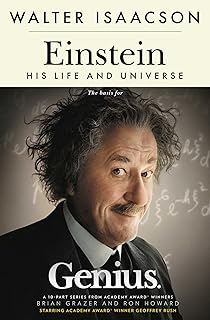
Whenever I chat with people, the topic of MBTI often comes up. And whenever I learn that someone is an INTP, I always say with a smile, “Oh, so you’re the ‘Einstein’ type.” Almost invariably, the response is: “Oh, not at all! How could a lazy person like me ever be compared to a genius?”
Indeed, for most of us, the name “Einstein” is so monumental that we can only gaze at it from a distance with silent awe. Finding common ground with him feels almost sacrilegious.
However, I would argue that Einstein was not a “Great Man” in the detached sense; he was, like you and me, a “Mortal.”
What is the difference between a “Great Man” and a “Mortal”? To me, the greatest distinction lies here: A Great Man walks in step with the destiny of humanity, whereas a Mortal, at times, cannot even control their own fate.
In Einstein, we see many personality traits that mirror our own. He was proud and rebellious, yet he had to compromise with life for a steady income, working quietly in a patent office. He performed miracles but also made stubborn mistakes. He used a spirit of skepticism to challenge the academic stagnation of others, yet when confronted with the “entanglements” of new theories, he chose to retreat into his own “field,” refusing to doubt a “God who does not play dice.” He loved peace and cherished freedom, yet in those turbulent years, he found himself adrift—homeless and swept along by forces beyond his control.
The book records a beautiful anecdote: Once, Einstein and Charlie Chaplin walked into a theater together to a standing ovation. Chaplin remarked, “They cheer for me because they understand me; they cheer for you because nobody understands you.”
To be misunderstood is to be lonely. Is there any solitude deeper than that? Einstein’s loneliness was the same as ours—the solitude of a mortal.
Einstein was both a genius and a mortal. After reading this book, perhaps you will agree. So, the next time I meet an INTP like you, maybe I’ll hear you say with a smile: “That’s right. I’m just like Einstein.”