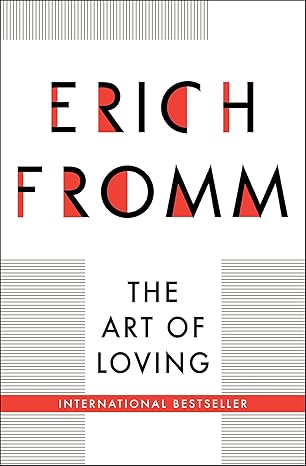
“What is love?” and “How do we love?” are questions that have confounded humanity since time immemorial. I did not open this book expecting the author to provide a flawlessly definitive answer. Yet, from the very first lines, I found myself utterly captivated by every word, yearning to deeply internalize the wisdom embedded within. Although it is a slender volume, it seamlessly encapsulates elements of Eastern and Western philosophy, psychology, natural sciences, sociology, and economics. Even when viewed through a contemporary lens, it feels almost entirely timeless.
Speaking of books feeling “out of touch” or disconnected from our reality, I would like to expand on this phenomenon.
How many times have we found ourselves turning page after page of a book, only to realize our minds have drifted into a daydream? When we snap out of it, we have absolutely no idea what those past few pages were about. At other times, when reading classical works, we might find their perspectives utterly inapplicable to modern society. Or, as an Easterner reading Western literature, I occasionally find the social settings and core values so foreign that they fail to resonate with me. This is especially true with self-help books; we often open them brimming with expectation, hoping for an epiphany to resolve our life’s dilemmas, only to walk away with very little. Regarding this, I would like to offer my dear readers a few modest pieces of advice.
First, to those who do not read—especially the younger generation—books seem to have become synonymous with obsolescence. We live in an era fraught with anxiety and insatiable desires, where our sense of security is derived solely from the pursuit of money and material possessions, and where our leisure time is spent numbing our senses with Netflix, TikTok, and alcohol. Yet, if we could dedicate just a small fraction of each day to reading, we might find ourselves much closer to the essence of life. For reading is the axe that breaks the frozen sea within us.
Second, this world is immensely complex and multifaceted. Even when confronting a single issue, we must mobilize theoretical knowledge from various disciplines and integrate multiple modes of thinking to truly comprehend it. When reading a book, we must consider the historical context in which the author wrote, examine our own lived experiences, and consciously adjust the relationship between ourselves and the text. We should extract the essence for our own use, rather than blindly believing everything—or conversely, dismissing everything—written in a book.
Finally, if a book fails to truly move us while we are reading it, there is absolutely no need to waste our time on it. Just as we do not force ourselves to swallow food that does not suit our palate, when we encounter a book that fails to interest us, one we cannot comprehend, or one whose content we dislike, we should decisively lay it down. There is no need to force ourselves through it.