In my first year at the company, during the year-end party, I happened to be seated next to the president. Upon learning I had just joined, he said something profoundly meaningful: “To someone who has just started, everything around you must still feel very fresh…”
The true weight, however, lay not in what he said, but in the half he left unspoken: “…In a few years, you’ll end up just like everyone else.”
Indeed, those first few years were fresh and filled with passion. But as time passed, I began to feel something was off—an underlying discomfort I couldn’t quite name. I wanted to understand why, and I finally found the answers in the works of Professor Hajime Ohta, a leading authority in the sociology of Japanese organizations.
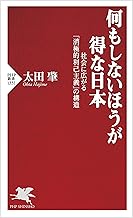
The title of one of Professor Ohta’s books, Japanese Organizations That Don’t Make Individuals Happy, is incredibly piercing. Why have Japanese-style organizations become a shackle to personal happiness? In his book The Reality of Peer Pressure, Ohta points out that the root cause lies in the “Three Sacred Treasures” of Japanese corporations: lifetime employment, the seniority-based wage system, and enterprise-specific unions. In the “Golden Age” of the past, these three pillars safeguarded the nation’s prosperity. But times have changed, and in today’s social context, they have created exactly what the title describes: a Japan where “doing nothing pays off”.
Looking around, this phenomenon is pervasive. Once they reach a certain rank, many employees stop striving and start “coasting”. Because of the seniority system, there are no higher positions to strive for even with effort. Conversely, the personnel evaluation system is rooted in “subtraction-based evaluation”, making a risk-averse, “don’t-stick-your-neck-out” style the ultimate strategy for survival. Furthermore, lifetime employment means companies cannot easily shed redundant labor, so “slacking off” on the clock carries no threat of dismissal. Meanwhile, enterprise unions, their interests tied directly to the company’s bottom line, have extremely weak bargaining power, rendering professional ambition a meaningless sentiment. All of this has led to a growing army of “old-timers” who cling to a philosophy of passive egoism. Such organizations can neither foster innovation nor hold their ground in the wave of globalization.
Currently, we are witnessing the signs of collapse in Japanese organizational structures: the turnover rate for new hires is climbing; fewer veteran employees aspire to management roles; wage growth cannot keep pace with inflation; and some companies have even begun introducing demotion-based evaluations for those who fail to meet standards.
Every time I read Professor Ohta’s books, I feel a deep sense of resonance, yet I always look forward to seeing what “prescription” he might offer for these ailments. For a long time, I felt his suggestions lacked a certain decisiveness. This is likely not due to a lack of skill on the author’s part, but because the structural rot of the Japanese organization has permeated society too deeply. Fortunately, in his latest work, Zero Turnover: ‘Self-Employed Style’ Employees Will Change the Company!, he finally presents a viable antidote. While it may not be a panacea for all ills, it at least offers a glimmer of hope.