If I were to ask you: “When does your workday truly begin, and when does it genuinely end?” Most people would find this easy to answer—referring to the moment they enter the office or the stamp on their timecard.
But upon reflection, the reality is far more complex. Even during non-working hours, our lives are incessantly influenced and dictated by work. “Having work to handle” has become a universally accepted justification to instantly abandon our private lives. Whether planning a trip or visiting a doctor, we only feel at ease once all work-related matters are settled.
The latent purpose of non-working time is merely to prepare people for the restart of work: Free time is not free at all.
This is because the world adheres to a value system where work equals justice and work equals morality. Guided by this ethos, many take it for granted that they live for work. But in the relationship between work and life, which should be the means and which the end?
Unfortunately, one almost never hears the phrase: “Life is justice; life is morality.” Take myself as an example: during the “honeymoon phase” of my first few years at the company, I always felt long holidays were too long. By the end of a seven-day Golden Week, I would start feeling bored, eager to rush back to the office.
Bertrand Russell once noted that if people fear the increase of leisure will lead to boredom, we should view this as “a condemnation of our current civilization.”
Our era does not condemn the boredom of leisure; it condemns the act of not working. Not working is seen as injustice; not working is seen as immorality. Consider the one question that invariably comes up in any introduction: “What do you do?”
“What do you do?” really means: “Summarize your contribution to the world in one sentence, and I will judge you based on your answer.” Or perhaps it is asking: “Are you a person worth knowing?”
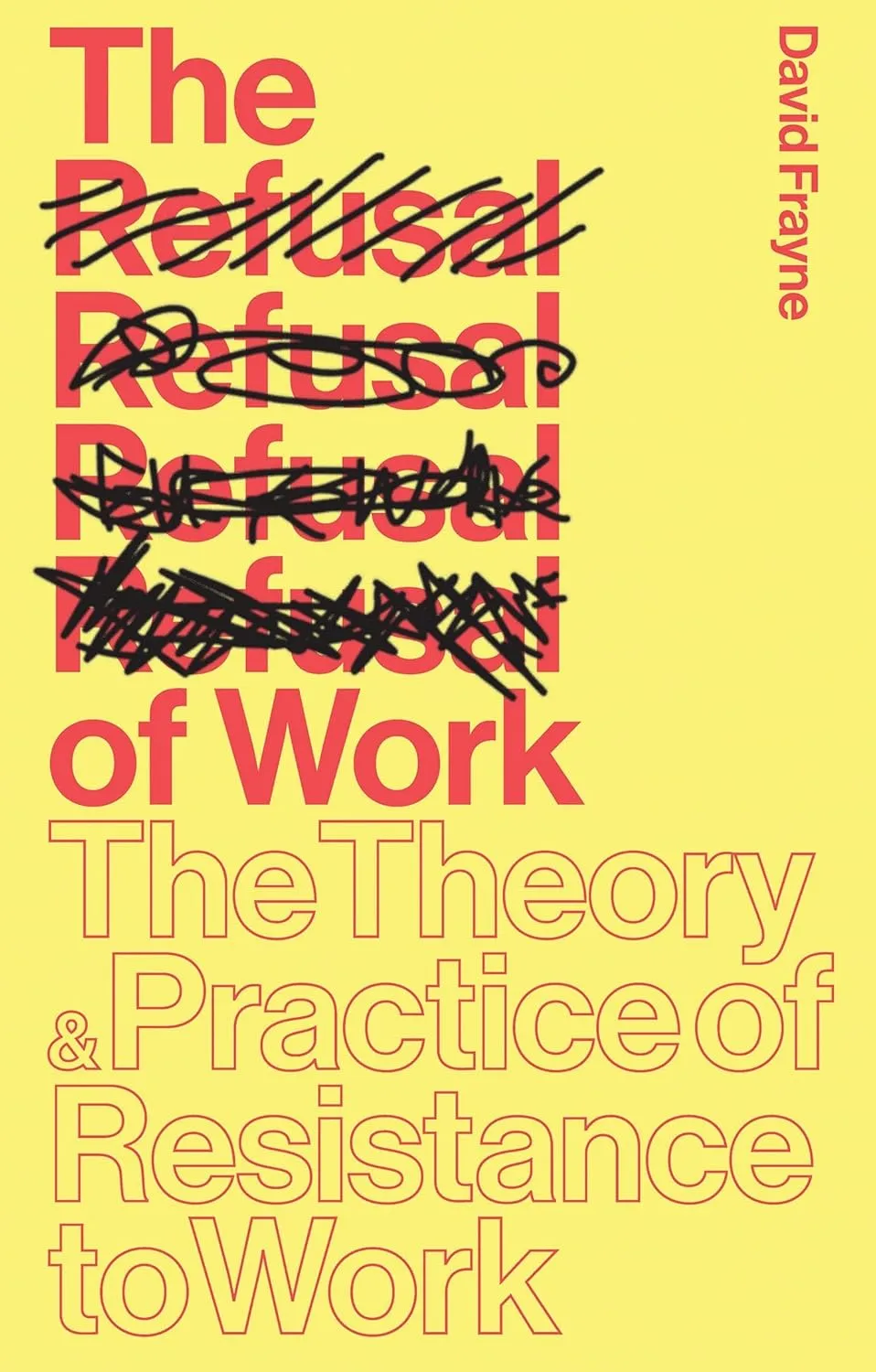
However, in this same era, we see a segment of the population beginning to question the meaning and importance of work in modern society—whether they have “awakened” due to personal crises or have been forced into “lying flat” by social circumstances. In the current age of the AI revolution, the reflections in this book are exactly what our generation and those to follow require. This is not to say we must immediately “refuse work” entirely. Rather, it is as the author suggests:
I hope to see a vibrant and progressive debate about the meaning and future of work. I want us to remember that nine-to-five, Monday-to-Friday work is a relatively recent invention, and to explore other possible ways of distributing work. I want us to think about alternative avenues for the joy and solidarity traditionally sought in work. I hope we can defend the right to pursue a diverse and meaningful life outside of work, and seek ways of self-realization that are less complicit in the profit-seeking games of capitalism. This requires us to fundamentally abandon the outdated thinking that measures a nation’s prosperity by economic growth, and to embrace a different vision of human progress and happiness—one grounded in non-material wealth such as health, free time, and the right to realize one’s own potential.