
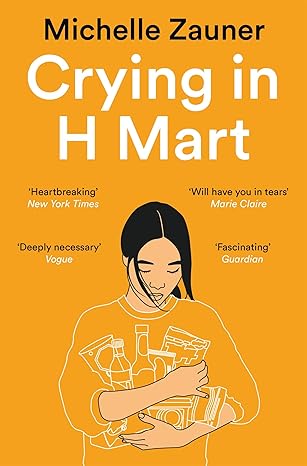
Pick up this book if you find yourself in need of tears.
Category: 人物
-

The Story of My Life
Recently I was visited by a very good friend who had just returned from a long walk in the woods, and I asked her what she had observed. ‘Nothing in particular,’ she replied. I might have been incredulous had I not been accustomed to such responses, for long ago I became convinced that the seeing see little.
—— Helen Keller, Three Days to See
If I were to summarize Helen Keller’s life in a single sentence, none would be more fitting than these words by Romain Rolland:
“There is only one true heroism in the world: to see the world as it is, and to love it.” -
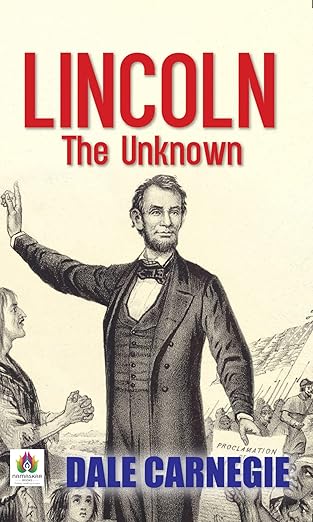
Lincoln the Unknown
When Heaven is about to confer a great responsibility on any man, it will first exercise his mind with suffering, subject his sinews and bones to hard work, expose his body to hunger, and confound his undertakings. In this way, it stimulates his mind, hardens his nature, and makes up for his deficiencies.
—— Mencius
Is Lincoln a great man?
No, Lincoln is not a great man.
Lincoln is a Saint. -
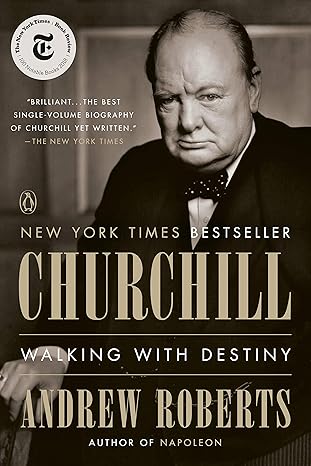
Churchill: Walking with Destiny
We are left sad and sorrowful in the dark, until the stars light up and remind us that there is always something beyond.
—— Winston Churchill, The River War
For the longest time, my understanding of Churchill was limited to a few lines in history textbooks; of the man himself, I knew next to nothing. Noticing how many people were reading about him, I picked up this masterpiece out of curiosity—and found myself utterly enthralled, unable to put it down.
Who exactly was Winston Churchill? In the epilogue, the author uses some thirty-odd nouns to define his identity. Allow me to follow suit and “teach a fish how to swim” by selecting a few of my own.
First, Churchill was a genuine aristocrat. Throughout his life, he required attendants for his daily routines; his noble upbringing meant he lacked even the most basic survival skills, like cooking a meal. Yet, simultaneously, he was a servant—dedicating his entire life to his country and laboring tirelessly for his people.
In times of war, Churchill was the ultimate Binder-in-Chief. He personally toiled to lash together allies being battered in the East with those reluctant to be battered in the West. This role turned him into a prolific traveler. As the book notes:
During his 1,900 days as Prime Minister and Minister of Defence, he traveled 110,000 miles by ship, train, and plane. He visited Cairo four times; Washington and Moscow three times each; Quebec twice; plus Bermuda, Tehran, Casablanca, Italy, Normandy, Paris, Malta, Yalta, Athens, Belgium, and Berlin.
Churchill was an extraordinary writer and orator. The Nobel Prize in Literature remains his crowning glory, awarded “for his mastery of historical and biographical description as well as for brilliant oratory in defending exalted human values”. He was also a natural wit. For instance, upon arriving in newly liberated Paris, he warned his audience before beginning his speech:
“I must warn you; be careful, for I intend—or rather, I shall try—to speak in French. This is a formidable task that will surely test your friendship for Great Britain.”
Finally, Churchill was an unabashed crybaby. Perhaps thanks to this emotional release, despite his excessive drinking, he lived to the ripe old age of 90, becoming a symbol of longevity. He outlived so many familiar faces: his King, his colleagues, his allies. In his twilight years, he became a political mascot and a living legend—an idol chased by rising stars.
Churchill’s life is the perfect embodiment of the word “Greatness”. To have lived a life as full as his is, beyond any doubt, a life well-spent. -
Haruko Obokata’s Diary
After finishing Haruko Obokata’s memoir, The Day, a profound restlessness lingered in my heart for a long time. It was not because of the scientific truth, but because I saw the truth of our society—its coldness and its utter ruthlessness.
When I felt my life was reaching its end, regardless of my own will, what floated before my eyes was the flame of a candle, flickering as if it might vanish at any moment.
Life is like a faint candlelight, swaying helplessly in this cold, grey world. The melancholy that shrouds the entire body; the physical form ravaged by illness; the sleepless nights—even when sleep is sought through the power of medication, it is nothing but a succession of nightmares until the moment of waking. Anger, resentment, doubt, loneliness, and fear… every waking second is occupied by these negative emotions. And the only shield left to fend them off is an endless stream of tears. How does one go on living?
The frantic desire for that flame not to vanish was pure instinct. Having experienced that desperation countless times, I fought to protect it even while being driven by the sudden impulse to just blow it out once and for all.
Is it hope? That final thing sealed at the bottom of Pandora’s box. A hope that is visible but forever out of reach. A hope that exists only to make the living endure agonizing torture time and time again. A ridiculous hope. A sinful hope. No, it is not hope; there must be something else in this world, a different kind of strength that keeps a person alive.
I always thought I was guarding my flame all by myself. But I realized then that even when my candle was about to go out, there were people there to share their flame with me.
It is the connection between human beings. It is the friendship from one’s most trusted confidants. It is the affection from one’s closest family. It is the sympathy from those in society who understand, encourage, and help. It is the empathy from everyone who treats one simply as a fellow human being. It is Love. It is only with love that this world gradually gains warmth and regains its color.
I will live on, passing the flame shared with me to someone else. That is what I intend to write in today’s diary.
As I reached the final line, tears finally broke through and streamed down my face. -
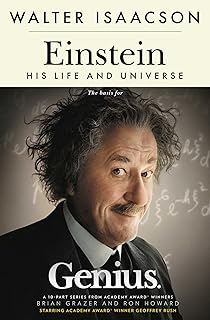
Einstein: His Life and Universe
Whenever I chat with people, the topic of MBTI often comes up. And whenever I learn that someone is an INTP, I always say with a smile, “Oh, so you’re the ‘Einstein’ type.” Almost invariably, the response is: “Oh, not at all! How could a lazy person like me ever be compared to a genius?”
Indeed, for most of us, the name “Einstein” is so monumental that we can only gaze at it from a distance with silent awe. Finding common ground with him feels almost sacrilegious.
However, I would argue that Einstein was not a “Great Man” in the detached sense; he was, like you and me, a “Mortal.”
What is the difference between a “Great Man” and a “Mortal”? To me, the greatest distinction lies here: A Great Man walks in step with the destiny of humanity, whereas a Mortal, at times, cannot even control their own fate.
In Einstein, we see many personality traits that mirror our own. He was proud and rebellious, yet he had to compromise with life for a steady income, working quietly in a patent office. He performed miracles but also made stubborn mistakes. He used a spirit of skepticism to challenge the academic stagnation of others, yet when confronted with the “entanglements” of new theories, he chose to retreat into his own “field,” refusing to doubt a “God who does not play dice.” He loved peace and cherished freedom, yet in those turbulent years, he found himself adrift—homeless and swept along by forces beyond his control.
The book records a beautiful anecdote: Once, Einstein and Charlie Chaplin walked into a theater together to a standing ovation. Chaplin remarked, “They cheer for me because they understand me; they cheer for you because nobody understands you.”
To be misunderstood is to be lonely. Is there any solitude deeper than that? Einstein’s loneliness was the same as ours—the solitude of a mortal.
Einstein was both a genius and a mortal. After reading this book, perhaps you will agree. So, the next time I meet an INTP like you, maybe I’ll hear you say with a smile: “That’s right. I’m just like Einstein.”