
At the final shareholder meeting where Warren Buffett presided as CEO of Berkshire Hathaway, he addressed a question from a Chinese attendee with these words: ” You were born at a good time. If you look all the way through the history of China, when would you rather have been born? 100 years ago, 500 years ago, 1,000 years ago, or now? It’s just hands down – you’ve been lucky.”
Indeed, the era we live in is a “great time.” As revealed in the book Factfulness, the truth about the world is, in many ways, far better than most people imagine. However, what happens when we zoom in to the level of the individual? If I were to ask: Are you satisfied with the current social environment and economic climate? Are you filled with anxiety about your future life? Are you living happily? We might very well arrive at a completely different conclusion—that the era we live in remains a “hard time”.
On Immigration: Whenever I see political groups scapegoat immigrants for social problems and gain high approval ratings, I suspect that society is undergoing significant hardship. But is what politicians say the truth? Shouldn’t we also listen to the perspectives of economists to understand the actual impact of immigration on the economy?
On Free Trade: When certain countries begin to use tariff barriers to besiege trade liberalization, gradually escalating it into a global-scale conflict, I feel deeply that we are mired in a hard time. “There are no winners in war” is a cliché, yet it remains true. So, how do economists perceive the issue of free trade?
On Economic Growth: In the book The Refusal of Work, the author calls from a sociological perspective for us to “fundamentally abandon the outdated thinking that measures a nation’s prosperity by economic growth”. Yet, from a political standpoint, abandoning growth means losing leverage in the strategic game between nations. How do economists view this dilemma?
Good Economics for Hard Times is precisely such a book—it articulates economic problems through the eyes of experts. The book covers a broad spectrum of themes with robust argumentation, making it an excellent and accessible read on macroeconomics.
In conclusion, we live in a great time, but simultaneously, a hard time. How we transform these difficulties into something better requires the concern and participation of every individual. As the authors of this book suggest: “Economics is too important to be left to the economists.”
Category: 社会
-
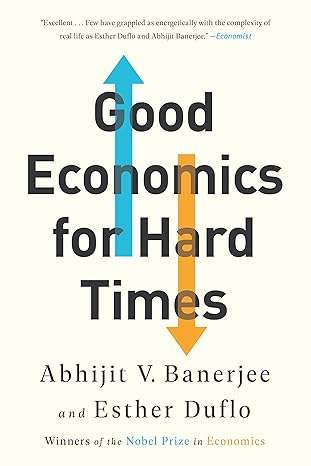
Good Economics for Hard Times: Better Answers to Our Biggest Problems
-
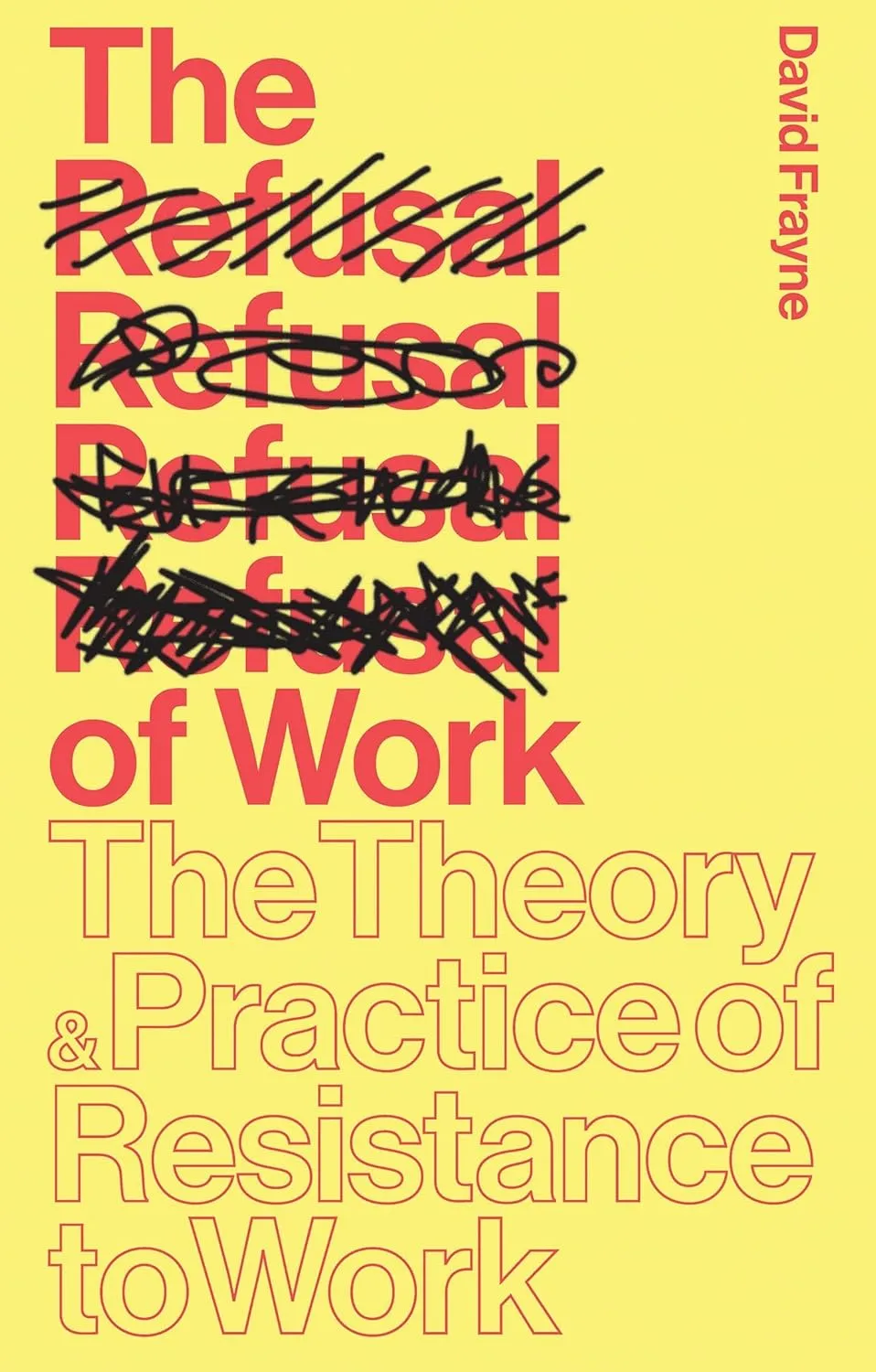
The Refusal of Work: The Theory and Practice of Resistance to Work
If I were to ask you: “When does your workday truly begin, and when does it genuinely end?” Most people would find this easy to answer—referring to the moment they enter the office or the stamp on their timecard.
But upon reflection, the reality is far more complex. Even during non-working hours, our lives are incessantly influenced and dictated by work. “Having work to handle” has become a universally accepted justification to instantly abandon our private lives. Whether planning a trip or visiting a doctor, we only feel at ease once all work-related matters are settled.
The latent purpose of non-working time is merely to prepare people for the restart of work: Free time is not free at all.
This is because the world adheres to a value system where work equals justice and work equals morality. Guided by this ethos, many take it for granted that they live for work. But in the relationship between work and life, which should be the means and which the end?
Unfortunately, one almost never hears the phrase: “Life is justice; life is morality.” Take myself as an example: during the “honeymoon phase” of my first few years at the company, I always felt long holidays were too long. By the end of a seven-day Golden Week, I would start feeling bored, eager to rush back to the office.
Bertrand Russell once noted that if people fear the increase of leisure will lead to boredom, we should view this as “a condemnation of our current civilization.”
Our era does not condemn the boredom of leisure; it condemns the act of not working. Not working is seen as injustice; not working is seen as immorality. Consider the one question that invariably comes up in any introduction: “What do you do?”
“What do you do?” really means: “Summarize your contribution to the world in one sentence, and I will judge you based on your answer.” Or perhaps it is asking: “Are you a person worth knowing?”
However, in this same era, we see a segment of the population beginning to question the meaning and importance of work in modern society—whether they have “awakened” due to personal crises or have been forced into “lying flat” by social circumstances. In the current age of the AI revolution, the reflections in this book are exactly what our generation and those to follow require. This is not to say we must immediately “refuse work” entirely. Rather, it is as the author suggests:
I hope to see a vibrant and progressive debate about the meaning and future of work. I want us to remember that nine-to-five, Monday-to-Friday work is a relatively recent invention, and to explore other possible ways of distributing work. I want us to think about alternative avenues for the joy and solidarity traditionally sought in work. I hope we can defend the right to pursue a diverse and meaningful life outside of work, and seek ways of self-realization that are less complicit in the profit-seeking games of capitalism. This requires us to fundamentally abandon the outdated thinking that measures a nation’s prosperity by economic growth, and to embrace a different vision of human progress and happiness—one grounded in non-material wealth such as health, free time, and the right to realize one’s own potential. -
Japan, Where It Pays to Do Nothing: The Structure of ‘Passive Egoism’ Spreading in Society
In my first year at the company, during the year-end party, I happened to be seated next to the president. Upon learning I had just joined, he said something profoundly meaningful: “To someone who has just started, everything around you must still feel very fresh…”
The true weight, however, lay not in what he said, but in the half he left unspoken: “…In a few years, you’ll end up just like everyone else.”
Indeed, those first few years were fresh and filled with passion. But as time passed, I began to feel something was off—an underlying discomfort I couldn’t quite name. I wanted to understand why, and I finally found the answers in the works of Professor Hajime Ohta, a leading authority in the sociology of Japanese organizations.
The title of one of Professor Ohta’s books, Japanese Organizations That Don’t Make Individuals Happy, is incredibly piercing. Why have Japanese-style organizations become a shackle to personal happiness? In his book The Reality of Peer Pressure, Ohta points out that the root cause lies in the “Three Sacred Treasures” of Japanese corporations: lifetime employment, the seniority-based wage system, and enterprise-specific unions. In the “Golden Age” of the past, these three pillars safeguarded the nation’s prosperity. But times have changed, and in today’s social context, they have created exactly what the title describes: a Japan where “doing nothing pays off”.
Looking around, this phenomenon is pervasive. Once they reach a certain rank, many employees stop striving and start “coasting”. Because of the seniority system, there are no higher positions to strive for even with effort. Conversely, the personnel evaluation system is rooted in “subtraction-based evaluation”, making a risk-averse, “don’t-stick-your-neck-out” style the ultimate strategy for survival. Furthermore, lifetime employment means companies cannot easily shed redundant labor, so “slacking off” on the clock carries no threat of dismissal. Meanwhile, enterprise unions, their interests tied directly to the company’s bottom line, have extremely weak bargaining power, rendering professional ambition a meaningless sentiment. All of this has led to a growing army of “old-timers” who cling to a philosophy of passive egoism. Such organizations can neither foster innovation nor hold their ground in the wave of globalization.
Currently, we are witnessing the signs of collapse in Japanese organizational structures: the turnover rate for new hires is climbing; fewer veteran employees aspire to management roles; wage growth cannot keep pace with inflation; and some companies have even begun introducing demotion-based evaluations for those who fail to meet standards.
Every time I read Professor Ohta’s books, I feel a deep sense of resonance, yet I always look forward to seeing what “prescription” he might offer for these ailments. For a long time, I felt his suggestions lacked a certain decisiveness. This is likely not due to a lack of skill on the author’s part, but because the structural rot of the Japanese organization has permeated society too deeply. Fortunately, in his latest work, Zero Turnover: ‘Self-Employed Style’ Employees Will Change the Company!, he finally presents a viable antidote. While it may not be a panacea for all ills, it at least offers a glimmer of hope. -
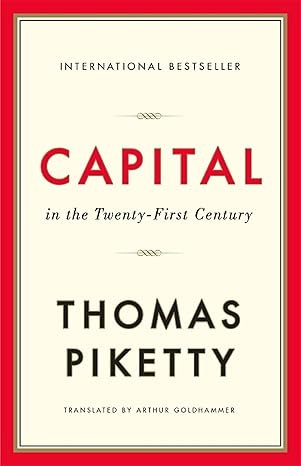
Capital in the Twenty-First Century
It is strange to think that I never formally studied “economics” in a classroom. If any economic knowledge remains from my schooling, it is likely just a few fragments of Marx’s “theory of surplus value”. Yet, as members of society, while we might loudly proclaim our indifference toward philosophy, history, or politics—or return every math, physics and chemistry formula to our teachers—we can never claim that “the economy” has nothing to do with us.
There is a popular business and finance channel on YouTube called “Xiao Lin Shuo”, boasting millions of subscribers, of which I am a loyal viewer. I remember in an early episode about book recommendations, she suggested highly narrative works like When Genius Failed, Too Big to Fail, and Freakonomics. However, she left a void when it came to books on macroeconomics. If I were to fill that void, my first choice would be Capital in the Twenty-First Century.
Allow me to briefly share why I admire this book.
First, it is an immensely ambitious work. I have read many “ambitious” books, but most of them either indulge in vague generalities, mistake a part for the whole, or suffer from loose structures and unclear themes. Capital in the Twenty-First Century is a clear exception. Its theme is the historical evolution and consequences of the wealth gap (or inequality in wealth distribution), and its ambition spans the entire globe. Speaking of ambition, Napoleon’s dream of conquering the world with cavalry and cannons failed, but Thomas Piketty has succeeded in laying bare the truths of this world through a single book.
Secondly, this book does not just tell us how the world is; it seeks to uncover the deep-seated reasons why it is this way. This involves a wealth of economic concepts and analytical research, which admittedly makes it a challenging read. Even economics students find it difficult, let alone a novice like me with no formal background in the subject. But dear reader, do not let the word “difficult” deter you; the parts we can understand are already enough to provide profound enlightenment.
Lastly, if we agree that the wealth gap is a problem that must be solved, we require a prescription—and Piketty is bold enough to offer one. This is perhaps the most widely debated section of the book. In my view, of all academic disciplines, economics is the one most prone to disagreement. I am well aware that macroeconomic issues cannot be settled overnight or with a single masterstroke. However, I admire the author’s spirit of “tossing out a brick to attract jade”—inviting further discussion. Progress in thought and institution can only occur when everyone joins the debate, can it not?