
My father, caught completely off guard, could only stare down at the floor. It was not until Dr. Kafka had taken his seat at the desk that my father managed to find his words again: “My dear Doctor, you are a rebel.”
“Regrettably,” Kafka replied, “the rebellion I am engaged in is the most exhausting, and perhaps the most hopeless, of all.”
“A resistance against whom?”
“Against myself.” Kafka partially closed his eyes, leaning back into his armchair. “Against my own limitations and inertia. Ultimately, it is a resistance against this very desk and this very chair.”
In my high school literature textbook, there were two lessons that left an indelible impression on me. One was Lu Xun’s The Medicine—memorable because we actually performed it as a stage play in class, and I played the old father who bought the bun soaked in human blood. The other was Kafka’s Before the Law. Yet, my impression of the latter was not born of any profound understanding, but rather of its utter abstraction and incomprehensibility. After all, to a high schooler, anything abstract and mysterious equates to being sophisticated. It was much like when a classmate told me he was reading Nietzsche; it left me, a boy engrossed in Jin Yong’s martial arts novels, entirely speechless.
Many years later, I opened The Complete Short Stories of Franz Kafka, where Before the Law appeared once more. I had naively assumed that with a few more years of life experience under my belt, I would surely possess a deeper understanding of the piece than my student self. Yet, upon re-reading it, I found its underlying allegory more elusive than ever. And it was not just this story; all of his works seemed to me remarkably dense and impenetrable.
It was only later, when I read Conversations with Kafka, that I finally understood why he had previously eluded me: I simply did not know the man behind the words.
What kind of man was Kafka?
He held a doctorate in law, yet he was also an ordinary clerk at the Workers’ Accident Insurance Institute. He was the “rebel” of his own description, and the “homeless stranger” penned by his close friend Max Brod. Kafka had no home of his own, for as he once said:
“At home? I live with my parents. That is all. Although I have a small room to call my own, it is not a home; it is merely a sanctuary that masks my inner unrest, only to trap me even deeper within it.”
And literary creation, for Kafka, was perhaps nothing more than a helpless means to resist the daylight, to resist the self:
“If it were not for these grim, sleepless nights, I would not write at all. Yet, it is precisely because of them that I am repeatedly reminded of my imprisonment in this dark solitude.”
The question then arises: once we understand what kind of person Kafka was, does it mean we can finally comprehend his works?
Not necessarily.
Take The Metamorphosis, for instance. It evokes in my mind the modern phenomenon of the hikikomori—the shut-in youth living off their parents—but this could hardly have been the author’s original intent. How much comparability can there truly be between our life experiences and Kafka’s? Does our existence even require Kafka? As Kafka himself remarked:
“We can, with relative ease, distill many books out of life, but we can distill no life out of books.”
Our inability to understand Kafka is much like “the daylight failing to comprehend the darkness of the night”. Yet, we find ourselves willing to return to him, to read him time and time again. Why? Because having come to know Kafka, we simply cannot find it in our hearts to abandon him, all alone, to that bleak, sunless, and despairing frozen sea of solitude.
Category: 艺术
-
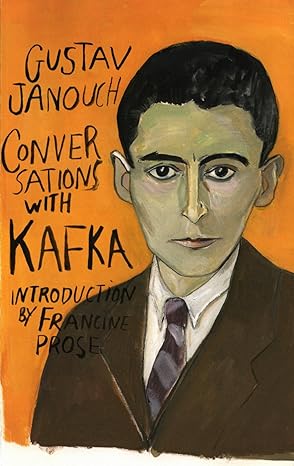
Conversations with Kafka
-
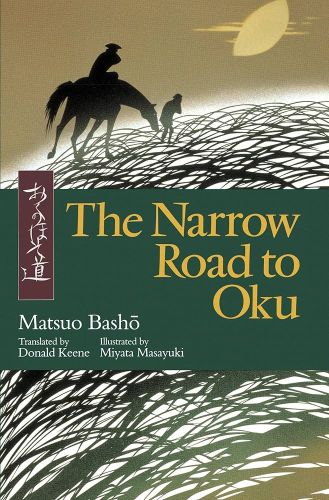
The Narrow Road to Oku
Ill on a journey / my dreams wander / over withered fields.
— Matsuo Basho
Life is a journey. “The universe is a temporary inn for all living things; time is a traveler through a hundred generations.” This was the profound realization of life captured by the Tang dynasty poet Li Bai in the year 733. Over a millennium later, Matsuo Basho echoed this very sentiment in the opening lines of The Narrow Road to Oku:
The sun and the moon are eternal voyagers; the years that come and go are travelers too.
While ancient scholars and officials either worried for the state from the heights of the imperial court or wrote of their personal paradises from the isolation of distant rivers and lakes, Matsuo Basho chose to comprehend the essence of life through the act of traveling. As this book stands as the crowning masterpiece of the Haiku Master, allow me to select a few of my favorite chapters to share with you.
Spring is passing— / birds cry, and tears / fill the eyes of fish.
Setting out on a long journey was by no means an easy feat for the ancients. Thus, upon the moment of departure, even the most mundane sights and scenes of daily life would cast a shadow of melancholy over the traveler’s heart. Yet, sorrowful partings were not confined to the beginning of the journey. In the latter half of the trek, Basho’s disciple Sora, who had faithfully accompanied him, fell ill and was forced to leave his master’s side. Facing the prospect of a lonely journey ahead, Basho wrote with deep emotion:
The sorrow of the one who departs, the regret of the one who stays behind—it is like a pair of wild ducks parting, losing themselves in the distant clouds.
A journey naturally brings all manner of encounters and sights. My absolute favorite episode in the entire volume occurs as they pass through the wilderness of Nasuno (Tochigi Prefecture). Lost in the fields, the travelers chance upon a simple local peasant. Too busy with his farm work to guide them himself, the peasant generously lends them his old horse to lead the way. What follows is a rustic yet heartwarming scene:
Two small children came running, following the horse’s tracks. One was a little girl named Kasane. Finding this unfamiliar name so remarkably gentle, Sora composed a verse:
The name Kasane / must surely belong / to the multi-petaled frilled pink.
Before long, we reached a village, tied the rental fee to the saddle-pommel, and sent the horse back on its own.
“Man is at leisure, cassia flowers fall; the night is still, the spring mountain empty.” Every era has its detached hermits who transcend the secular world. In Sukagawa (Fukushima Prefecture), the duo visited the haiku poet Kasai, a hermit who lived away from the world in a thatched hut shaded by a massive chestnut tree. To him, Basho gifted this exquisite verse:
A flower unnoticed / by the people of the world— / the chestnut by the eaves.
Upon arriving at the Iizuka Hot Springs (Fukushima Prefecture), Basho was tormented by severe abdominal pain. To make matters worse, their lodging was miserable—a leaking roof during a night of continuous rain, compounded by relentless mosquito bites. Contemplating the arduous road ahead, anxiety inevitably crept into his heart. Yet, thoroughly exhausted in both body and mind, Basho spurred himself forward with these words:
A pilgrimage to the remote borders of the earth, holding the conviction of selflessness and impermanence—if I should die by the roadside, it is but the decree of Heaven. With my spirits somewhat restored, I pressed on, traversing roads in all directions, and crossed the Great Gate of Date.
Reaching the coast of Izumozaki (Niigata Prefecture) and gazing out across the sea toward Sado Island—a place used as a land of exile in ancient times—Basho composed this awe-inspiring masterpiece:
The rough sea— / stretching over to Sado Island, / the Milky Way.
In the town of Ichifuri (Niigata Prefecture), Basho happened to share an inn with two courtesans. The courtesans, who sacrificed their youth to the pleasure quarters, and the haiku poet, who wandered to the ends of the earth, belonged to two entirely different worlds. Yet, in the grand design of things, there seemed to be a subtle, unspoken connection between them. Thus, Basho left behind this poignant reflection:
Under the same roof / courtesans too are asleep— / bush clover and the moon.
This captures perfectly the essence of Bai Juyi’s famous lines from The Song of the Pipa: “Both of us are castaways at the ends of the earth; meeting like this, what matters it that we were strangers before?”
Finally, I would like to praise the Kadokawa Shoten edition of The Narrow Road to Oku. The content is exceptionally rich. Beyond the original text, it includes modern translations, detailed commentary, and historical columns. It does not merely showcase the beauty of the written word; it serves as an invaluable guide for readers to understand the history, geography, and humanities of that era. I highly recommend it. -
The Warmth of Words
A book perfect for a Christmas gift. A book to read a few chapters of before drifting off to sleep.
-
Fallen Leaves: Last Words on Life, Love, War, and God
Only a life fully lived can distill a worldview of such profound richness.