At the final shareholder meeting where Warren Buffett presided as CEO of Berkshire Hathaway, he addressed a question from a Chinese attendee with these words: ” You were born at a good time. If you look all the way through the history of China, when would you rather have been born? 100 years ago, 500 years ago, 1,000 years ago, or now? It’s just hands down – you’ve been lucky.”
Indeed, the era we live in is a “great time.” As revealed in the book Factfulness, the truth about the world is, in many ways, far better than most people imagine. However, what happens when we zoom in to the level of the individual? If I were to ask: Are you satisfied with the current social environment and economic climate? Are you filled with anxiety about your future life? Are you living happily? We might very well arrive at a completely different conclusion—that the era we live in remains a “hard time”.
On Immigration: Whenever I see political groups scapegoat immigrants for social problems and gain high approval ratings, I suspect that society is undergoing significant hardship. But is what politicians say the truth? Shouldn’t we also listen to the perspectives of economists to understand the actual impact of immigration on the economy?
On Free Trade: When certain countries begin to use tariff barriers to besiege trade liberalization, gradually escalating it into a global-scale conflict, I feel deeply that we are mired in a hard time. “There are no winners in war” is a cliché, yet it remains true. So, how do economists perceive the issue of free trade?
On Economic Growth: In the book The Refusal of Work, the author calls from a sociological perspective for us to “fundamentally abandon the outdated thinking that measures a nation’s prosperity by economic growth”. Yet, from a political standpoint, abandoning growth means losing leverage in the strategic game between nations. How do economists view this dilemma?
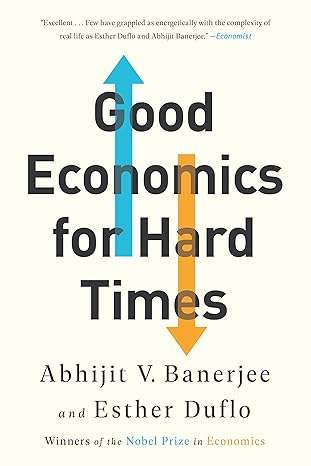
Good Economics for Hard Times is precisely such a book—it articulates economic problems through the eyes of experts. The book covers a broad spectrum of themes with robust argumentation, making it an excellent and accessible read on macroeconomics.
In conclusion, we live in a great time, but simultaneously, a hard time. How we transform these difficulties into something better requires the concern and participation of every individual. As the authors of this book suggest: “Economics is too important to be left to the economists.”