
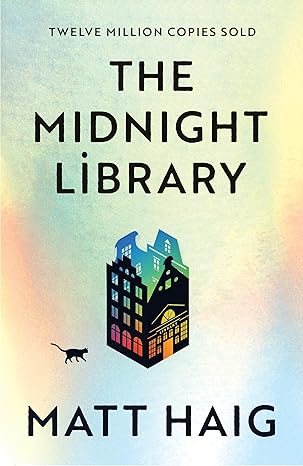
This book is a story about philosophy, parallel universes, existence, and living—but above all, it is a story about regret.
Regret is an age-old cliché. When it comes to this emotion, we often hear people declare: “I never regret the past, because regret serves absolutely no purpose in the present.” Everyone aspires to live a life devoid of regrets, but is that truly achievable in the real world? To explore this question, we must first define what regret actually is.
The human brain possesses the unique ability to recall the past and envision the future, allowing our minds to traverse unrestricted through time—backward and forward among the past, present, and future. We can even mentally backtrack to a specific event in the past, anchor ourselves at that exact moment, and imagine how the future might have unfolded from there. In other words, our imagination allows us to mentally reconstruct past events. Consequently, branching out from that singular moment in the past, two distinct selves emerge in two different worlds: a virtual self inhabiting the reconstructed world, and a real self living in the actual world. Naturally, we compare these two versions of ourselves. When we perceive that the self in the real world is worse off, we experience pain and find ourselves blaming the choice we made at that past juncture. This entire cognitive and emotional architecture is what we define as regret.
Once we comprehend the true nature of how regret is generated, it becomes glaringly obvious that the experience of regret is universal. Furthermore, it is utterly impossible to live a life entirely free from it.
Why is regret unavoidable? Because in the exact moment of the past, we had no way of knowing that we would come to rue the choices we were making. Of course, some might counter: “There were times when I acutely felt that I might regret what I was doing, yet weighed down by the emotional gravity of the moment, I felt compelled to proceed anyway.” Indeed, we cannot deny the existence of such scenarios. However, looking back, if you had already predicted future regret at that past moment, does that not precisely prove the sheer inevitability of regret itself?
Since regret is an inescapable process, and since it inherently brings feelings of pain and guilt, how then should we coexist with it?
First, face it with equanimity. A regret-free life simply does not exist; every single person carries their own catalog of regrets. Regret is not a matter of shame, so please look your regrets dead in the eye. Second, strive to let go. If there is no such thing as a perfect life, then by the exact same token, there is no such thing as a worst-case life either. Even if one were to argue that our current life is merely the karmic retribution of a series of “wrong” choices, at the very least, every beautiful thing we possess right now is also the continuation and reward of that very same past. Finally, refine the future. The duration and depth of the negative emotions brought by regret depend entirely on whether we take positive, proactive action. By reflecting on our regrets, we can make better decisions in our future journeys. If we do nothing, regret will vividly and repeatedly loop in our minds without end—trapping us, forever wandering, within the corridors of the Midnight Library.
Category: 虚构
-
The Midnight Library
-
Outside is Summer
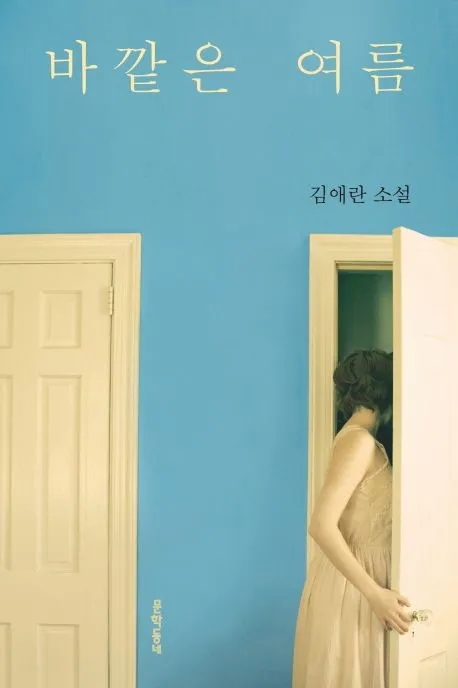
“Life, as I understand it, is everything between sorrow and beauty.”
Seven short stories centered on “loss”. With a realistic touch, the author depicts the ordinary yet helpless pains of modern society. A heart-wrenching masterpiece. -
If Cats Disappeared from the World
In Korean Class
Teacher: Read any good books lately?
Me: Yeah, a novel. Outside is Summer by the Korean author Kim Ae-ran.
Teacher: What’s it about?
Me: … (Racking my brain, scrolling through vocabulary, assembling grammar, and forcing out a sentence. My brain cells were literally frying during this process.)
Teacher: I’ve been reading a novel recently too.
Me: (Still recovering from my brain short-circuiting) …
Teacher: (Staring at me) …
Me: (Reconnection successful) What’s the book?
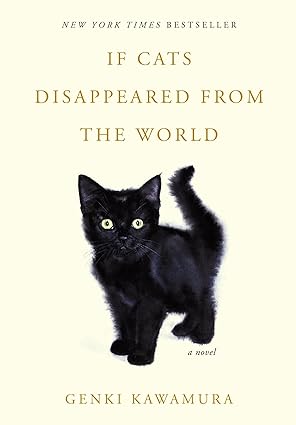
Teacher: (Heaving a sigh of relief) If Cats Disappeared from the World by Genki Kawamura.
Teacher: (Starts explaining the plot) The protagonist is diagnosed with cancer and is told he’s “Sihanbu insaeng.”
Me: Si-han-bu-insaeng?
Teacher: Right, it means a “terminal diagnosis” or, in other words, a “prognosis of remaining life”.
(Ding! Korean vocabulary +1)
Teacher: (Continuing the plot) One day, a devil appears and tells him he’s going to die tomorrow. But, he can trade one thing from his life to vanish in exchange for one extra day of living. If it were you, what would you choose?
Me: … Cats?
Teacher: Starting with cats already?! Well, the protagonist chose phones, movies, and clocks. I won’t “Seupo” the rest for you.
Me: Seu-po?
Teacher: Yeah, a “spoiler” is shortened to “Seupo”.
(Ding! Korean vocabulary +2)
Right after class, I hopped on Amazon and ordered the book my teacher recommended. -
Gone with the Wind
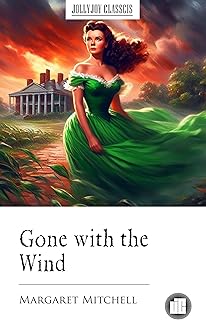
Back in my university days, I was busy devouring works by Alexandre Dumas and Henryk Sienkiewicz—books I found in the school library that weren’t available in mainstream bookstores—while struggling through Dan Brown’s original English novels to prep for my language exams. I remember hearing about a female classmate who had read Gone with the Wind six or seven times. At the time, I couldn’t wrap my head around it. Why spend so much time on a single book when there’s a whole world of literature out there? It wasn’t until many years later that I finally picked it up myself. Now, I must admit: I finally understand why someone would read it over and over. It is, beyond a shadow of a doubt, a profoundly impressive masterpiece.
Here is why I fell in love with Gone with the Wind.
First and foremost is the character of Scarlett O’Hara. If you only look at the title, The Beauty in a Chaotic World, you might expect a simple romance set against the backdrop of war. However, it is actually a work of immense conflict and depth that explores the very essence of life. That depth lies within Scarlett herself: her first-love complex, her Irish blood, her ruthlessness and her vulnerability, her persistence and her compromises… all of these elements craft a character that feels incredibly real and full-bodied. Of course, the book is not just about Scarlett. While my personal reading style doesn’t usually lead me to read a book six or seven times, if I were to pick it up again, I would devote much more attention to another character I dearly love—Melanie Hamilton.
Throughout the book, I kept asking myself: “Gone with the wind”—who exactly is it that is “gone” or “drifting”? In the midst of shifting eras, it is: Scarlett, a resilient life influenced by the Old South yet refusing to be shackled by it; Rhett, a rebellious warrior who scorns tradition yet remains a tangled soul seeking a home in love; Ashley, the embodiment of the Southern aristocratic class, powerless to master his own destiny; Melanie, a brave and saintly soul who holds fast to old values while moving forward firmly in a new world. Ultimately, it is the thousands upon thousands of real individuals, swept up by the currents of history, drifting with the wind.
Finally, I have a deep appreciation for Mr. Fu Donghua’s translation. This version was translated in 1940 in Japanese-occupied Shanghai. At the time, the film adaptation had just premiered in the city, causing such a sensation that it “set a record never before seen since foreign films were first screened”. Though Mr. Fu was “weary of the task of translation”, after reading the original, he felt it was “indeed worth translating”. Encouraged by friends who noted that Japan already had two best-selling translations—”If they have it, how can we not?”—he embarked on the project. Looking back at Shanghai in that era, was it not also a “chaotic world”? In this intersection of time and space, whenever I encounter the Jiangnan dialects woven into his translation, it always stirs a faint, lingering sense of nostalgia. -
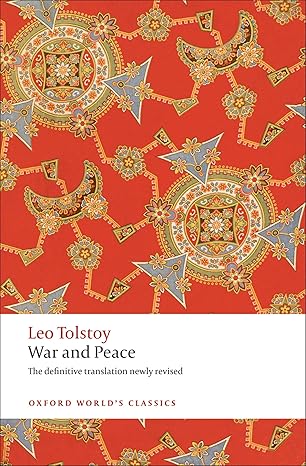
War and Peace
In my student days, almost everything I read was fiction. I remember a senior in my research lab once telling me: “You should read more non-fiction; novels aren’t that meaningful.” At the time, I couldn’t grasp the weight of those words. It wasn’t until I left the ivory tower and entered society that I began to agree. I became more interested in the actual world I inhabited—craving to understand the stories that had happened, were happening, and would emerge within it. Fiction seemed to belong to another dimension entirely. Gradually, my passion for novels waned; I even began to look down on them slightly, viewing them as one might view “junk food”—an occasional indulgence for relaxation.
That was, until I read War and Peace.
If I had to describe the sensation this book gave me in one word, it would be “Impact.” How can I even begin to convey the magnitude of that shock?
War and Peace is an epic. Its grandeur lies not only in the restoration of sweeping battlefields but in the vivid portrayal of countless characters. One cannot help but be submerged in the vast ocean of the author’s imagination. Tolstoy is a master of realism. He creates such an immersive experience that you feel as though you are standing right beside the characters—clearly seeing their expressions, hearing their inner monologues, and feeling their joys, angers, and fears. His prose is a form of art. Consider this passage, where the imagery is almost palpable:
Since Rostov had entered, her face had suddenly changed. It was like a multi-sided, carved, and painted lantern; originally appearing coarse, dim, and crude, but once lit from within, this complex and exquisite work of art suddenly reveals its startling beauty with unexpected clarity. This was how Princess Marya’s face was suddenly transformed.
Interwoven throughout War and Peace are profound explorations of history and philosophy. “The will of a historical hero not only fails to guide the actions of the masses but is, in fact, constantly being guided by them,” Tolstoy wrote. Regarding freedom, death, religion, and love—themes that permeate the novel—one moment I am stunned to find my own thoughts mirrored in Pierre’s mind; the next, I see the same phantoms I once glimpsed through the eyes of Prince Andrei. As a reader, I found myself constantly forced to pause, to think, to attempt to understand and resolve these questions—because they are, after all, my own questions.
There are books that, once closed, leave us different from who we were when we first opened them. For me, War and Peace is exactly such a book. It has fundamentally redefined the place of the “novel” in my heart.